Server Rack Cabinet Sizing & Selection: A Guide for Data Center & Telecom Projects
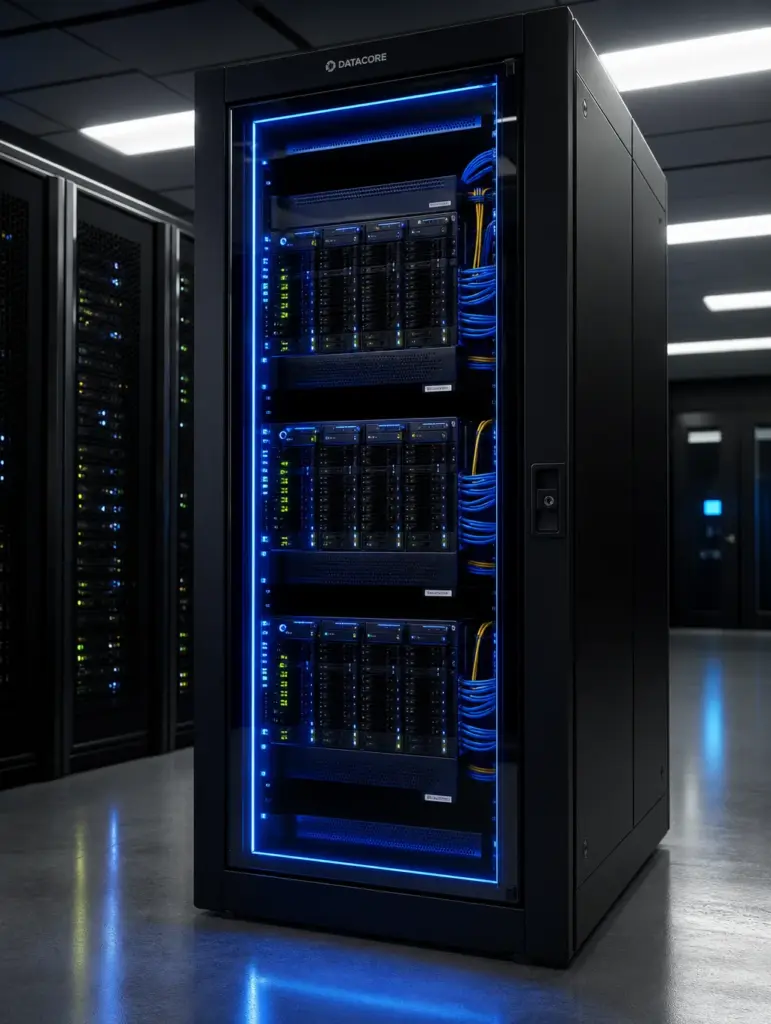
Server Rack Cabinet Sizing & Selection: A Guide for Data Center & Telecom Projects
Quick answer: Server rack cabinets are sized in rack units (U): one U equals 1.75 inches (44.45 mm). Data center standard heights run 42U–47U, typical depths are 800–1,000 mm, and static load ratings range from 800 to 1,500 kg. Add 20–30 percent spare U for growth, and measure the deepest server including cable arms before ordering. Request a quote with your equipment list.
1. Introduction
The server rack cabinet is the backbone of every data center and telecom room. It holds the servers, switches, and cables that keep systems running. Choose the right size and configuration, and deployment is smooth. Choose wrong, and you fight the cabinet for years.
Rack sizing is more than picking a height. Depth, mounting style, cooling, cable paths, and weight capacity all matter. This guide walks through every decision so you can specify the right server rack cabinets for your project.
Whether you are planning a new data center, refreshing a server room, or building outdoor telecom infrastructure, the same fundamentals apply: measure twice, spec once, and leave margin for growth.
2. Rack Unit Basics: What Is a "U"?
Rack height is measured in rack units, abbreviated U. One U equals 1.75 inches (44.45 mm) of vertical mounting space.
Wall-mount racks typically hold 6U to 12U and suit network closets and small sites. Freestanding racks start around 24U and go up to 48U. Two-post racks are cheaper and suit cable-heavy environments; four-post racks carry heavier servers safely. Open-frame racks maximize airflow and access, while enclosed cabinets add security and noise control.
Standard heights:
- 12U to 24U: compact, wall-mount or small network rooms
- 42U to 47U: the most common full-height range for data centers
- 45U to 48U: high-density variants for maximum capacity
Server equipment is specified in U as well: 1U servers, 2U servers, and so on. Count your equipment height, add clearance for cabling and airflow, and choose the next standard height. Always leave some spare U for growth.
| Equipment | Typical Height |
|---|---|
| 1U server | 1.75 in / 44 mm |
| 2U server | 3.5 in / 89 mm |
| 4U chassis | 7 in / 178 mm |
| Switch (48-port) | 1U-2U |
| Patch panel | 1U |
Add 20-30 percent spare U for future equipment. Racks that are 100 percent full at installation are already out of space.
3. Depth: The Most Overlooked Dimension
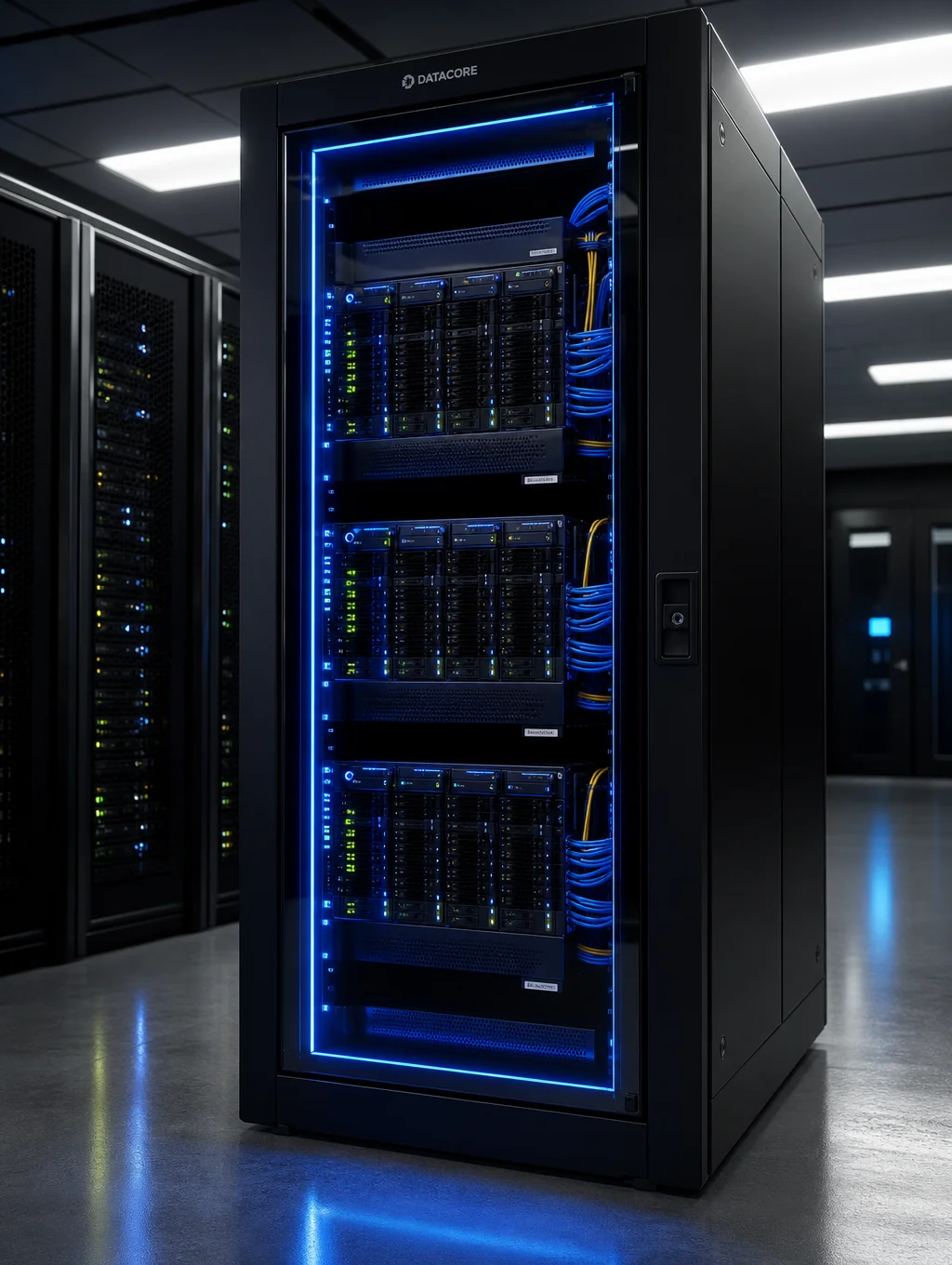
Depth determines which equipment fits. Shallow racks (600 mm) suit switches and patch panels. Standard racks (800-1000 mm) fit most servers. Deep racks (1000-1200 mm) handle high-end servers with long chassis and cable arms.
Measure the deepest piece of equipment you plan to install, including cable management arms and rear clearance. A rule of thumb: add 100-150 mm beyond the deepest server for airflow and cable relief. Our rackmount server chassis range covers 1U to 8U configurations with matching depth options.
4. Width and Mounting Standards
Most equipment follows the 19-inch standard, defined by the EIA-310-E specification. Some telecom gear uses 23-inch rails. Standard rack widths are 600 mm and 800 mm; depths commonly range from 600 mm to 1,200 mm.
Key mounting decisions:
- Threaded rails: traditional, adjustable, accept cage nuts
- Square-hole rails: the data center standard, tool-less mounting
- Combination rails: both patterns in one rack
Confirm which rail pattern your servers use before ordering. Mixing patterns across a deployment is a common and costly mistake.
Rail accessories also matter. Cage nuts for square-hole rails, slide kits rated for your server weight, and rear mounting brackets all affect how smoothly installation goes. Ask the rack manufacturer for compatibility guidance if you are unsure.
Rack accessories worth planning: cable trays, PDU (power distribution unit) mounting brackets, blanking panels, and earth bonding kits. Order them with the rack — retrofitting later is slower and more expensive.
5. Cooling and Airflow
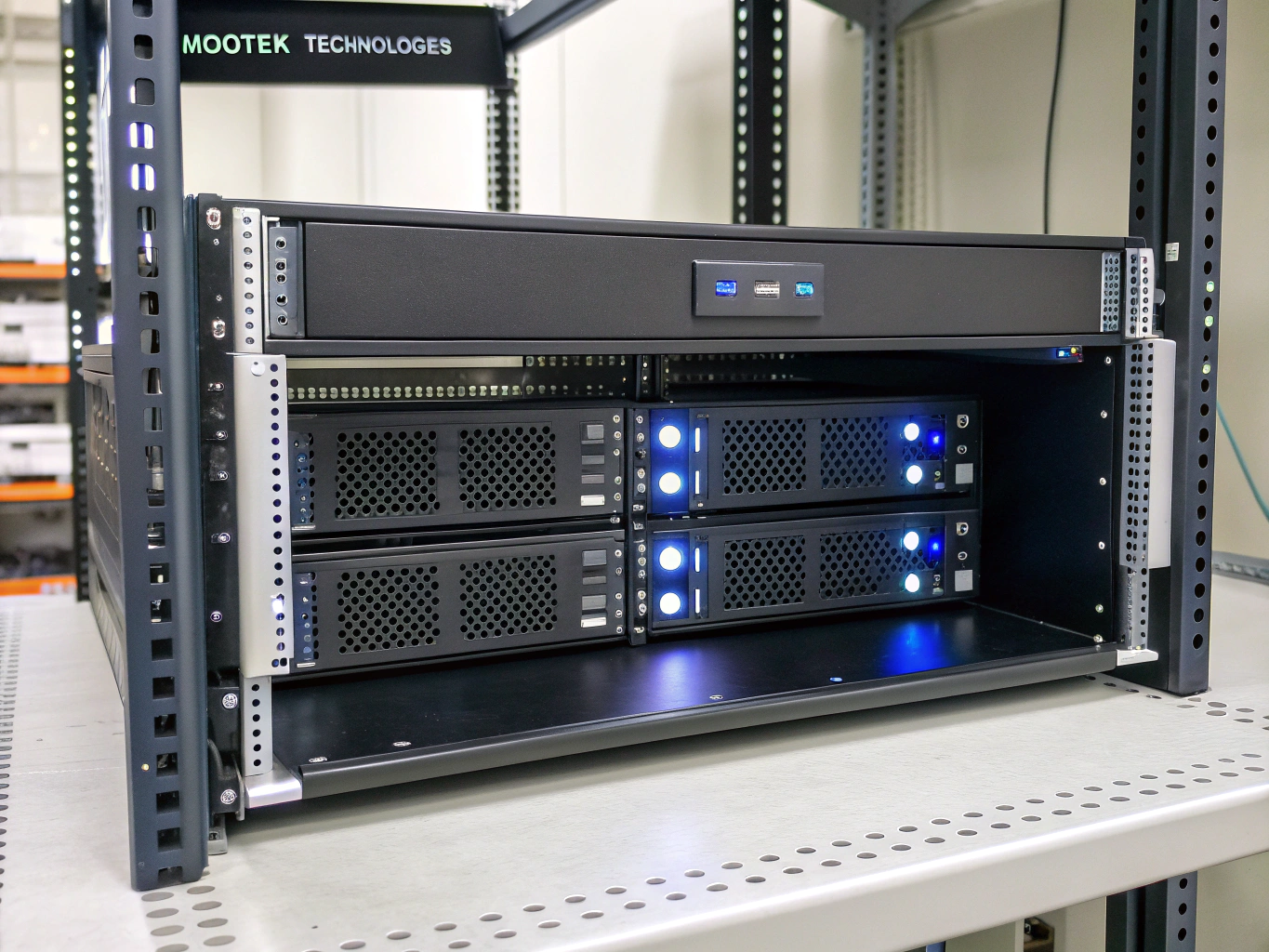
Server racks generate serious heat. The cabinet must support the airflow strategy of your room.
| Density | Typical Cooling | Cabinet Needs |
|---|---|---|
| Low (< 5 kW/rack) | Room cooling | Vented doors |
| Medium (5-10 kW/rack) | Contained aisles | High open-area doors, blanking |
| High (> 10 kW/rack) | In-row / liquid | Rear-door heat exchangers |
- Hot aisle / cold aisle: racks face alternating directions to separate intake and exhaust air
- Front-to-back airflow: equipment draws air from the front, exhausts to the rear — the standard
- Blank panels: seal unused U spaces so air cannot recirculate
- Perforated doors: high open-area doors improve airflow through the rack
Cabinet design directly affects thermal performance. Vented front and rear doors, side panels, and top cable openings all participate in airflow management.
Measure the open-area ratio of perforated doors: 60-70 percent open area is typical for air-cooled racks. Higher density deployments may need liquid cooling or rear-door heat exchangers — plan the cabinet architecture with that possibility in mind.

6. Cable Management
Cables fill racks fast. Plan for them from the start:
- Vertical cable managers on the sides or rear
- Horizontal managers between equipment rows
- Top and bottom cable entry with brush grommets
- Adequate depth behind the rails for cable slack
Clean cabling is not just cosmetic. It improves airflow, simplifies maintenance, and reduces the risk of accidental disconnects.
Use color-coded patch leads for different networks, label both ends of every cable, and document the rack layout. In a 42U rack, good cable management can save hours during every maintenance window.
7. Load Capacity and Floor Planning
Server racks must carry the equipment weight plus margin. Typical static loads are 800-1,500 kg. Confirm the floor can support the loaded rack, especially in raised-floor environments.
For seismic regions, racks should include bracing points and be anchored per local codes. Telecom sites add the same requirement for outdoor cabinets, where wind loads join seismic forces.
Floor planning checklist:
- Rack footprint plus service clearance (front and rear)
- Aisle width for equipment movement
- Power and network drop locations
- Cooling distribution alignment
A typical cold aisle is 1.2 m (4 ft); hot aisles can be narrower. Confirm swing space for doors and lift clearance for heavy equipment. Raised-floor sites must verify tile load ratings against the loaded rack weight.
A rack that fits the drawing but not the aisle is a project delay waiting to happen.
For raised-floor data centers, also verify the floor tile load rating and the sub-floor cabling paths. For slab floors, confirm the concrete can take the point load of the rack feet. A loaded 42U rack concentrates significant weight on four small feet.
8. Security and Environment
Data center racks often need more than physical strength:
- Locking doors: front and rear access control
- Side panels: secure and redirect airflow
- Environmental monitoring: temperature and humidity sensors
- EMI considerations: shielded designs for sensitive environments
Access control matters in colocation and shared facilities. Keyed or electronic locks on front and rear doors protect both equipment and customer data. In high-security environments, consider tamper-evident seals and camera sightlines around the rack rows.
For telecom sites, outdoor-rated cabinets add weather protection. See our telecom cabinets for indoor and outdoor options. Outdoor enclosures need IP-rated sealing, corrosion protection, and thermal management for ambient temperature swings — the same discipline as any outdoor enclosure deployment.
9. Custom vs Standard Server Racks
Standard racks cover most projects and ship faster. Custom racks win when you need unusual dimensions, integrated cooling, special mounting, or brand-specific cable management.
A typical data center project follows the same sequence as any metal fabrication job: define the specification, review the design, approve a prototype, then scale to production. If you are managing that process for the first time, our custom fabrication cost guide explains how pricing and lead times work.
SafeFaber builds custom server rack cabinets and enclosures with your exact requirements, supported by design and engineering review. For general enclosure guidance, our industrial storage cabinets 101 guide covers the wider product family.
Custom options include: non-standard heights and depths, mixed rail patterns, integrated busbar systems, acoustic doors for noise-sensitive rooms, and seismic bracing for earthquake regions.
10. Frequently Asked Questions
Q1: What is the most common server rack height?
42U to 47U full-height racks are the data center standard, with 42U the most common.
Q2: How do I know what rack depth I need?
Measure your deepest server including cable arms, then add 100-150 mm for airflow and cable relief.
Q3: What is the difference between 19-inch and 23-inch racks?
The mounting width between rails. 19-inch is the IT standard; 23-inch is used by some telecom equipment.
Q4: How much weight can a server rack hold?
Typical static loads range from 800 to 1,500 kg. Confirm the rated load with the manufacturer.
Q5: Do I need perforated doors?
For most air-cooled deployments, yes — high open-area doors improve airflow. Sealed doors suit specialized environments.
Q6: Can you build racks to custom dimensions?
Yes. SafeFaber custom-builds rack cabinets to your height, depth, rail type, and accessories.
Q7: What is the difference between a rack, a cabinet, and an enclosure?
A rack is an open frame with mounting rails. A cabinet adds doors and side panels. An enclosure is a fully sealed housing with environmental protection — used outdoors and in harsh conditions.
Q8: Do server racks need to be grounded?
Yes. Racks should be bonded to the facility ground with a proper earth kit, protecting equipment and personnel from static and fault currents.
11. Conclusion
Server rack sizing is a small decision with big consequences. Match height, depth, rails, cooling, and cabling to your actual equipment — and leave room to grow.
The rack is also a fabrication project like any other: designed to specification, built from certified steel, and finished for a long service life. Buying from a manufacturer with real in-house production means the same quality discipline applies to your rack as to any precision enclosure.
SafeFaber fabricates server rack cabinets and rackmount chassis for data center and telecom projects across many industries, with custom sizing and worldwide on-time delivery. Send your requirements for a quote within 24 hours.
Related guides: ingress protection for enclosures.