Zinc Plating vs Powder Coating: Which Finish?
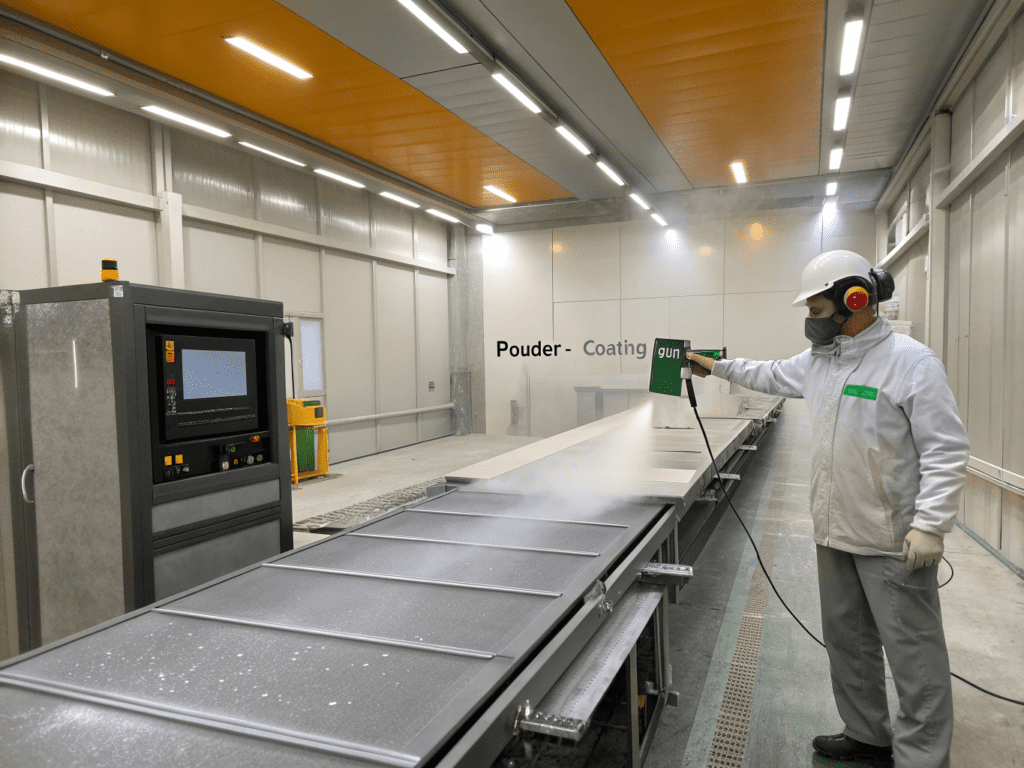
Zinc plating vs powder coating is a choice between mechanisms, not brands, because the two are rarely interchangeable. Zinc plating is a thin metallic coating that protects steel sacrificially: it keeps working at scratches and cut edges, stays electrically conductive and barely changes a dimension. Powder coating is a much thicker organic film that gives colour, a durable surface and barrier protection for visible parts — but it insulates. Choose zinc plating where conductivity or a tight fit matters, powder coating where appearance and a thick protective film matter, and expect to use both on the same assembly.
This guide compares the two on the points that decide real parts — protection mechanism, corrosion life, conductivity, threads and fits, film thickness, cost and documentation — and closes with a selection table and the callouts to put on the drawing.
Zinc Plating vs Powder Coating: Two Ways to Protect Steel
Zinc plating is a metal coating applied by electroplating. Zinc is deposited onto the steel surface, usually with a chromate conversion layer on top. It protects in two ways: as a barrier, and — more importantly — sacrificially. Zinc is less noble than steel, so at a scratch, a sheared edge or a damaged corner the zinc corrodes first and the steel beneath is protected. Film thickness is measured in micrometres, so part dimensions barely change.
Powder coating is an organic film. Dry powder is sprayed electrostatically onto a prepared surface and cured in an oven into a continuous polymer layer. It protects as a barrier only. Where the film is broken — a chip, a cut edge, a scratch from handling — corrosion starts at the break and can creep underneath, lifting the coating from within.
That single difference in mechanism explains most of the practical trade-offs that follow. A sacrificial coating forgives handling damage; a barrier coating has to stay intact to work. It also explains why the two finishes fail differently in the field, which is the next question most buyers ask.
Which Lasts Longer? Corrosion, Rust and Cut Edges
Neither finish is unconditionally better, and the honest answer depends on whether the film stays whole.
Zinc plating gives predictable zinc corrosion resistance at moderate thickness, and its advantage is that damage stays local. A zinc coated bracket protects its own cut edges and punched hole walls without a secondary operation, because the coating is sacrificial rather than merely covering. The limit is thickness and time: zinc is consumed as it protects, so thin deposits in aggressive or coastal service eventually let red rust appear. When someone asks whether zinc plating is rust proof, the accurate reply is that it is rust-delaying rather than rust-proof — and that hours to white rust and hours to red rust are both functions of thickness, chromate chemistry and the environment.
Powder coating corrosion resistance is excellent while the film is continuous, which is why outdoor cabinets and equipment housings are usually coated. Its weakness is the same property. Once there is a break, corrosion can spread under the film invisibly, and by the time it shows as blistering the steel has already lost section. Powder coating and rust are therefore linked by edge design and handling as much as by chemistry, and how long powder coating lasts depends on the powder chemistry, the pretreatment and the exposure rather than on film thickness alone.
Practical rules follow. Use zinc plating where edges, threads and cut faces are exposed or where handling damage is likely. Use powder coating where the part is seen and can be handled carefully, and specify a pretreatment and an exterior-grade chemistry for weathering instead of assuming all powders age equally. On a galvanised substrate the comparison shifts: powder coating over galvanised steel is a barrier film on top of a sacrificial one, a strong combination provided the surface is prepared for adhesion.
Zinc Plating vs Powder Coating: Side-by-Side Comparison
| Characteristic | Zinc plating | Powder coating |
|---|---|---|
| Coating type | Metallic deposit, typically with a chromate conversion layer | Organic polymer film cured from dry powder |
| Protection mechanism | Sacrificial plus barrier | Barrier only |
| Typical film thickness | A few micrometres up to about 25, by class | Roughly 60–120 micrometres for exterior-grade work |
| Electrically conductive | Yes, with contact resistance verified at bonding points | No |
| Appearance | Metallic silver, blue-bright, yellow or black by chromate | Full colour range, gloss controllable |
| Hides forming marks | Barely; a thin film follows the surface | Yes; the film covers minor marks |
| Behaviour at damage | Keeps protecting at cuts and scratches | Corrosion starts at the break |
| Weathering | Stable metallic surface, limited colour options | Depends on chemistry; exterior polyesters resist chalking far better than epoxies |
| Repairability | Re-plating is a batch process | Touch-up paint or a patch, rarely invisible |
| Best for | Fasteners, grounding parts, tight fits, parts to be painted afterwards | Visible panels, outdoor cabinets, colour-critical parts |
The two columns are not competing on the same axis. Zinc plating wins on continuity, fit and damage tolerance; powder coating wins on colour, coverage and film build. A sheet metal finishing decision usually comes down to which of those three things the part actually needs.
Conductivity, Threads and Assembly Fit
This is where the choice stops being about corrosion and starts being about function.
- Conductivity and bonding. A zinc plated surface stays metallic and conductive, which is why zinc plated parts are so often used where a grounding or bonding path runs through a panel, a door or a bracket. A chromate film and surface oxide raise contact resistance, so continuity is verified rather than assumed — but the mechanism is conductive. Powder coating is an insulator: a coated surface cannot be relied on for electrical continuity, so bonding points are masked bare or given dedicated grounding hardware, and continuity is checked after coating.
- Threads. Zinc adds micrometres; powder adds tens of micrometres. A powder coated thread will not accept a mating fastener cleanly, so threads are masked, plugged or chased after coating. Zinc plated threads generally assemble as they are, though fine pitches and heavy deposits deserve a gauge check. Where thread fit is critical, state the requirement on the drawing and fix the sequence: thread before coating, or after.
- Mating faces and fits. Two powder coated faces will not bolt flat against each other: the film acts as a compliant shim, joints creep under load and torque figures change. Where faces land on each other, masking them is a drawing decision, not a shop preference.
- Masking is part of the specification. Ground studs, mating flanges, threads, bores, hinge points and keyways are the usual list, and every one of them should appear on the drawing, because unmasked coating there means rework or scrap.
Selection Table: Which Finish for Which Part
| Part or requirement | Choose | Reason |
|---|---|---|
| Grounding, bonding and earthing parts | Zinc plating | The coating stays conductive, so continuity is preserved |
| Fasteners, clips and small hardware | Zinc plating | A thin film keeps thread fit, and the coating protects sacrificially |
| Precision parts with tight fits and bores | Zinc plating | A micrometre-scale film does not disturb dimensions |
| Parts that will be painted or coated afterwards | Zinc plating as a base | Gives corrosion protection beneath the topcoat |
| Visible enclosure panels, doors and machine covers | Powder coating | Colour, uniform appearance and a thick protective film |
| Outdoor cabinets and equipment housings | Powder coating over prepared steel | Barrier film plus an exterior-grade powder chemistry |
| Wash-down or mildly aggressive environments | Powder coating where the chemistry suits | The film isolates the steel; confirm chemical compatibility first |
| High-abuse surfaces expecting scuffs | Powder coating | A thicker film resists abrasion better than a thin deposit |
| One assembly needing both | Both, with masking | Finish first, then mask and apply the second finish, with the sequence agreed at quotation |
Read the table as a tie-breaker rather than a rule: when a part carries current, moves in a tight bore or fastens to something else, zinc plating usually wins. When a part is seen, touched or weathered, powder coating usually wins.
Can You Powder Coat Over Zinc Plating?
Yes, and the combination is common where a part needs sacrificial protection plus colour. Adhesion depends on the chromate present and on preparation, so tell the coater that a plated substrate is coming: some chromate films interfere with paint adhesion, and the sequence and pretreatment have to be agreed in advance. The practical rule is to finish first, then mask, then apply the second finish, with that sequence fixed at quotation rather than improvised in the shop.
Cost, Batch Size and Lead Time
The two finishes are priced on different units, and that matters more than the headline difference. Plating is a batch wet process: a small batch plating job is charged per tank run, so a batch minimum dominates and the cost per part falls quickly as quantity rises. Powder coating is priced largely by surface area, colour changes and masking labour, and because it runs inside the production flow it tolerates one-offs far better.
The consequence is practical rather than financial. For a handful of small parts that need protection, coating is usually the easier route to schedule. For a large number of small parts that need corrosion protection together with conductivity or a tight fit, plating becomes the cheaper answer per piece. Colour adds cost to coating, because every change is a line stop, while plating's variable is the chromate chemistry and the masking list. Lead time follows the same logic: a plating job waits for a tank run at a specialist, while in-house coating can be scheduled inside the production sequence.
Writing the Finish Callout on the Drawing
A callout that produces the right part the first time is specific on both sides of the comparison.
For zinc plating, state the plating standard, the thickness class in micrometres with the measurement method, the chromate type and appearance, whether the deposit is rack or barrel applied, and — for high-strength fasteners — the bake requirement with records, because absorbed hydrogen can cause delayed brittle fracture. Add the masking list. Our guide to zinc plating types covers how those type designations and thickness classes are written, and where black oxide or blackening is the alternative rather than zinc.
For powder coating, state the powder chemistry — an exterior-grade polyester where weathering matters, an epoxy where indoor chemical resistance matters more — the colour and gloss reference, the film thickness range, the surface preparation and the masking list. Colour is matched against an approved sample or a colour reference, because batch variation is real on any coating line.
Both finishes need acceptance criteria: what is unacceptable in appearance, how adhesion is checked, and what corrosion testing applies. Where a standard governs, name it and let it govern — where the drawing is silent, the supplier is guessing, and guessing shows up later as rework.
How Finishing Fits Into Production
Finishing sits between fabrication and assembly: parts are cut, punched, bent and welded, then finished, then assembled. Because of that order, finish decisions affect welding, hardware selection and the assembly sequence, so they belong in the design review rather than in a note added after the first article. Two consequences follow: welded assemblies should be finished after welding, since coating cannot repair a weld; and hardware installed before coating has to survive the coating process, which usually means it is fitted afterwards.
SafeFaber's in-house finishing is powder coating. Zinc plating and other finishes are quoted and confirmed per project rather than claimed as our own process, and we will tell you plainly which route a job will take. Parts are cut and formed from carbon steel sheet or the other materials on your drawing, using laser cutting from 0.5 mm to 20 mm, CNC punching, CNC bending, welding, machining and turnkey assembly, with industrial cabinets and enclosures as a routine product family. Tolerances are per your drawing, under an ISO 9001:2015 quality management system.
Frequently Asked Questions
Is zinc plating or powder coating better for corrosion protection?
It depends on the environment and on whether the film stays intact. Zinc plating protects sacrificially, so it keeps protecting steel at scratches and cut edges, but it is thin and consumed over time. Powder coating gives a much thicker barrier that resists weathering and chemicals well, but once the film is broken corrosion can spread underneath it.
Does powder coating conduct electricity?
No. Powder coating is a cured organic polymer and acts as an insulator, so a coated surface cannot be relied on for electrical continuity or grounding. Where an enclosure door must bond to its body, mask the bonding points bare or fit dedicated grounding hardware, then verify continuity after coating.
Which finish is thicker, zinc plating or powder coating?
Powder coating, by a wide margin. Zinc plating typically runs from a few micrometres to about 25 depending on the class specified, while powder coating typically builds 60 to 120 micrometres for exterior-grade work. That is exactly why plating suits tight fits and thread assembly, and why coating requires masking on threads and mating faces.
Can you powder coat zinc plated or galvanised parts?
Yes, in both cases, and the combination is used where a part needs sacrificial protection plus colour. Adhesion depends on how the zinc surface is prepared, so declare the substrate to the coater and agree the pretreatment and sequence before production rather than after the first batch.
What about black oxide or galvanising as a third option?
Black oxide is a conversion coating that darkens the surface with almost no sacrificial protection, so it suits oiled indoor parts and tight fits rather than humid or outdoor service. Galvanising applies a much thicker zinc layer than plating and is normally chosen for structural steel; it also protects sacrificially, but it changes dimensions and appearance far more, so it is not a substitute on precision sheet metal parts.
Related Reading
- Zinc plating types — Type I, II and III, thickness classes and acceptance criteria.
- Metal finishes chart — how to choose between coating routes.
- Metal surface treatments — the finishing processes we run and quote.
- Sheet metal cost breakdown — what finishing does to a part price.
SafeFaber is a contract sheet metal manufacturer producing enclosures, cabinets, racks and brackets to drawing for OEMs, integrators and EPCs, under an ISO 9001:2015 quality management system. Every quotation includes a drawing review at no charge, including the finish route, so you know before you order whether a part will be plated, coated or both: contact SafeFaber.