Sheet Metal Louvers: Design, Airflow and Manufacturing
Sheet Metal Louvers: Design, Airflow and Manufacturing
Quick answer: Sheet metal louvers are formed or welded blade openings that let air move through an enclosure while blocking rain, dust and direct line of sight. Pressed louvers are punched and formed from the panel itself and suit thinner material and higher volumes; welded blade louvers are built from separate strips and suit thicker panels, larger openings and heavy weather exposure. Open area, blade spacing and orientation set the airflow, and the required air volume is decided by your thermal design. Send your drawing for a fabrication review.
1. What Louvers Do in a Sheet Metal Part
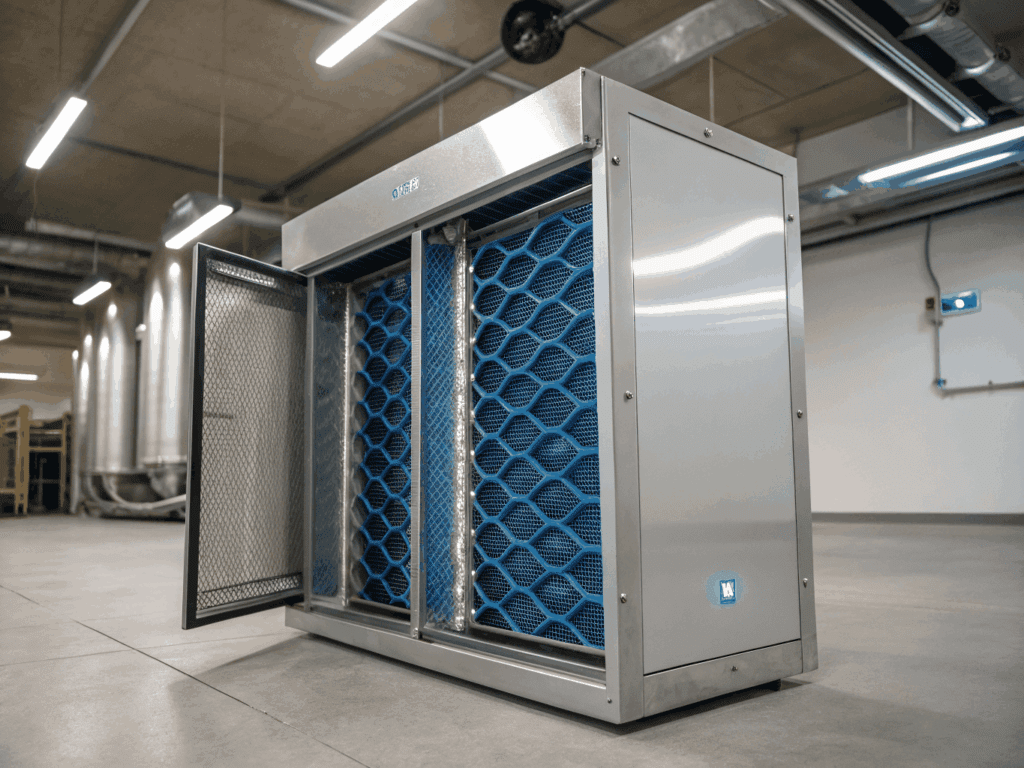
A louver is an opening with formed blades that push air in a preferred direction while turning water and debris away. You will find them on control cabinets, motor control centres, telecom enclosures, generator canopies and HVAC housings. Compared with a plain cutout, a louver adds directional flow (blades steer air and add surface for heat exchange), weather resistance (overlapping blades interrupt the path of rain and splash) and screening (blades hide internals and block large debris). That is why louvers appear wherever an enclosure must breathe but cannot simply have a hole in it.
2. Two Families of Louvers
Pressed louvers are the default for series production: the tool is the investment, and once it exists the cost per louver is small. Blade shape is fixed, so the design follows the tool.
Welded blade louvers suit large outdoor enclosures, generator housings and architectural panels. Blades are cut, formed and welded in place; that freedom costs welding time, which is why it appears at lower volumes and on openings too large or too thick for a pressed tool. A hybrid is also common: a formed louver insert welded or riveted into a larger frame.
3. Open Area and Airflow

Airflow through a louver depends on open area (the share of the opening actually free for air, since blades and margins block part of the panel), blade angle and depth (deeper, steeper blades turn more water but restrict flow and raise pressure drop), and approach and exit conditions (how close the louver sits to internal components and the outside surface).
Two realities follow. Louvered openings are not free-flowing: for the same size, a plain punched panel passes more air, because blades consume area, so high-heat equipment needs larger louver areas or fan assistance. And more louvers is not automatically better: tight spacing raises pressure drop and the material can tear before the tool forms a clean profile.
The air volume your equipment needs, and the temperature rise it tolerates, are set by your thermal design and applicable standards and must be verified by a qualified engineer. Size the louver area from that analysis, not from the space left on the panel.
Ventilation choices. Natural convection suits modest heat loads with an unobstructed path: low inlet, high outlet, clear chimney. Forced ventilation moves more air through a smaller area but pulls in dust unless filtration is designed in. Louvers also rarely work alone: perforated panels add open area behind a rain shield, and insect mesh sits behind the louver for fine screening. Specify the layer order from outside to inside, because it decides what a technician must remove to clean the path.
4. Weather and Dust: Getting the Geometry Right
Louver weather performance is mostly geometry, and most failures are orientation mistakes rather than bad tooling.
- Blades should shed water away from the opening. Each blade overhangs the one below, with edges turned outward or downward so water runs off the face. An inverted louver loses most of its rain protection while looking almost identical.
- Avoid upward-facing openings. Any horizontal louver facing the sky collects water; where an upward face is unavoidable, use a hood or a side-facing louver with an internal baffle.
- Give the water somewhere to go. The blade profile should lead water to the outside face, with a drain path below the opening, because water pooling in a louver cavity eventually finds a way in.
- Plan for wind-driven rain. Deeper blades, a hood and a plenum behind the louver all help. If your project has an ingress-protection target, it must be demonstrated by testing against the applicable standard — geometry alone does not constitute a rating.
- Check the dust path. In dusty plants blades act as settling surfaces, so avoid internal-facing angles that trap dust and keep filters accessible from outside.
5. Tooling and Batch Thresholds
- Under a few dozen pieces: a small pressed set on available tooling, or welded blades, usually beats paying for a new form tool.
- Hundreds to thousands of pieces: a dedicated louver tool amortises quickly and piece cost drops sharply.
- Large or thick panels: welded blades avoid the need for an oversized tool that may not exist.
- After tooling is cut: any change to blade profile, pitch or louver size means a new tool, so freeze the geometry first.
Ask two questions early: which tooling fits this geometry, and what batch size makes dedicated tooling worthwhile? Those answers usually settle the design within a day. Our engineers review drawings free of charge and flag louvers that cannot be formed cleanly in the specified material.
6. Calling Out Louvers on a Drawing
Two notes prevent most rework: edge and bend distances matter, because louvers too close to a bend distort during forming and too close to an edge tear out; and orientation is a manufacturing instruction, so a clear note stops the set being installed inverted.
7. Common Louver Mistakes
- Spacing too tight — blades crowd and the material can tear.
- Louver installed the wrong way up — rain protection disappears while the part still looks correct.
- Open area ignored — the louver looks adequate but starves internal airflow, so the enclosure runs hotter than designed.
- Louver-to-bend distance too small — forming distorts the louver.
- Powder coating applied blind — coating bridges fine gaps and reduces open area; state whether interiors are coated or masked.
- No filtration planned — an unfiltered inlet pulls dust onto electronics, and failure appears months later.
- Venting strategy chosen from leftover panel space — heat load and airflow requirement should decide it.
8. Fabrication and Finishing at SafeFaber
SafeFaber fabricates louvered panels and welded blade assemblies as part of complete enclosure projects. In-house processes include fiber laser cutting from 0.5–20 mm, CNC punching, CNC bending up to 3 m, MIG/TIG/spot welding, powder coating and turnkey assembly. Free DFM feedback comes with every quotation, prototyping runs in 3–7 business days, batch production takes 2–4 weeks, and quotations return within 24 hours. Manufacture runs under ISO 9001:2015 through Safety Spacs Ltd., Yantai, China, and finished goods ship door to door.
If a louver geometry cannot be produced cleanly in your material and thickness, we say so before tooling is cut. Our design engineering team can propose alternatives such as a perforated insert or fan filter cutout, and our metal surface treatments process handles coating and masking.
Frequently Asked Questions
Q1: What is the difference between a pressed louver and a welded blade louver?
A pressed louver is punched and formed from the panel using a dedicated louver tool, which suits thinner material and repeat production. A welded blade louver is built from separate blades cut, formed and welded into a frame, which suits thicker panels and large openings.
Q2: How much airflow does a louvered panel allow?
It depends on open area, blade angle and depth, and nearby obstructions; louvers always pass less air than a plain punched opening of the same size, because the blades consume area. The air volume your equipment requires is set by your thermal design and applicable standards and must be verified by a qualified engineer.
Q3: Which direction should louvers face on an outdoor enclosure?
Blades should overhang so water sheds off the outside face and away from the opening, and no louver should face upward; if a horizontal face is unavoidable, add a hood or internal baffle. Mark orientation on the drawing, because an inverted louver loses most of its rain protection.
Q4: When does dedicated louver tooling make sense?
From roughly a few hundred pieces upward, depending on louver size and blade profile; below that, available tooling or welded blade construction is usually cheaper. Any change to profile, pitch or louver size after tooling is cut requires a new tool, so freeze the geometry first.
Q5: Can louvered panels be powder coated without losing airflow?
Yes, with the right specification: coating adds thickness and can bridge tight gaps, reducing open area. State on the drawing whether louver interiors are coated or masked, so the coating does not seal the vent.
Conclusion: Design the Air Path, Then the Louver
Louvers are simple parts carrying real responsibility: they decide whether an enclosure breathes, whether rain stays out, and whether a technician can keep the vent clean. Choose the construction that fits your volume and material, size the open area from the thermal requirement, orient the blades so water sheds outward, and put the full callout on the drawing.
SafeFaber builds custom louvered panels, enclosures and welded assemblies for industrial clients worldwide. Our sheet metal fabrication covers laser cutting, CNC punching, bending, welding, powder coating and turnkey assembly, with free DFM review and door-to-door shipping. See our metal fabrication services page, or explore our enclosures range, then send your drawing for a 24-hour quotation.