Welding vs Riveting: Choosing the Right Assembly Method
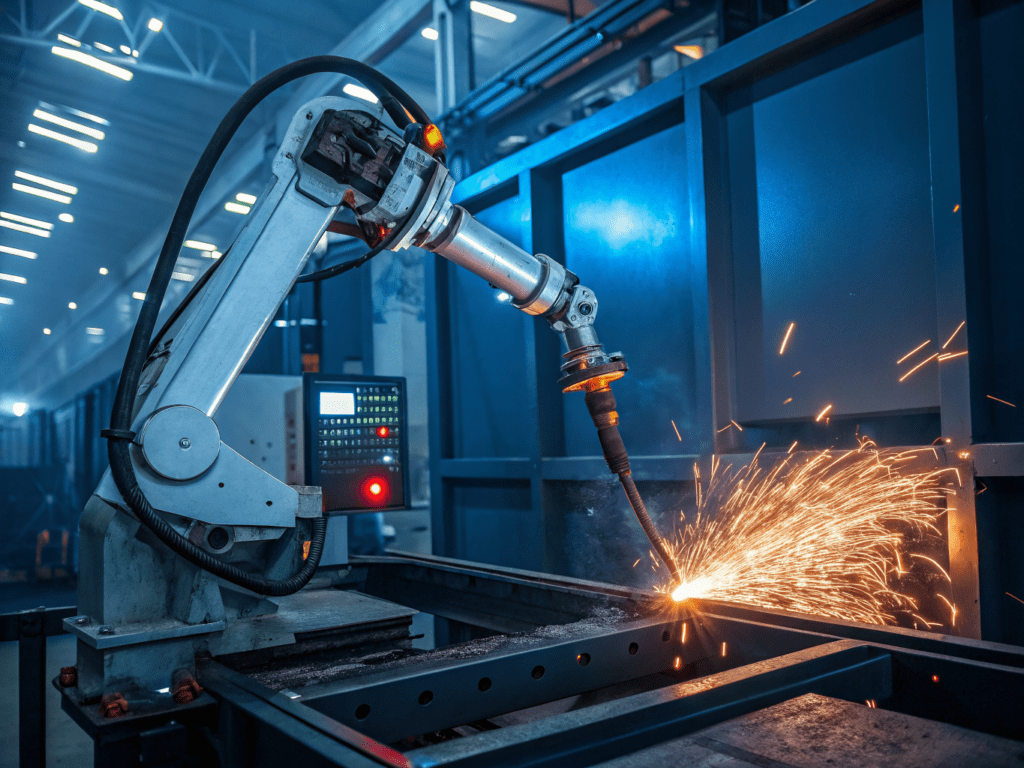
Quick answer: Welding fuses parts into one continuous piece of metal: strongest for same-material joints, but permanent and prone to distortion. Riveting clamps parts with mechanical fasteners: no heat, no distortion, works on coated and dissimilar materials, and can be disassembled. Adhesive bonding joins them with a structural film that spreads load across the whole overlap and seals as it joins. Choose welding for permanent, stiff or leak-tight assemblies in weldable material; riveting or bonding for mixed materials, coated parts, field assembly, and anything that must come apart. Send your drawing and we will recommend the method that fits.
Three Different Ideas About Joining
Welding fuses metal so two parts become one continuous body, and load travels through the metal itself. Riveting keeps the parts separate and clamps them with a fastener through both, so load travels through the fastener and the bearing area around the holes. Adhesive bonding also keeps the parts separate, but joins them across an overlap, so load travels through the adhesive in shear — spread over the whole bonded area rather than concentrated at a hole or a weld toe.
Everything else follows: heat, distortion, serviceability, appearance, material compatibility and cost are downstream of fuse-versus-clamp-versus-bond.
How Each Joint Carries Load
A welded joint draws strength from the fused cross-section, so a sound fillet or butt weld behaves close to a continuous structure — which is why welded frames feel rigid, with no slip or clearance anywhere in the joint. The trade-off is that a weld is only as good as its execution: incomplete fusion, undercut, porosity or an undersized weld concentrates stress exactly where the part is most highly loaded.
A riveted joint transfers shear through each rivet shank and loads the sheet in bearing around each hole, so it is designed as a pattern of fasteners each carrying a share of the load. It also fails progressively rather than instantly — rivets loosen, holes elongate, and the joint gives visible warning.
A bonded joint spreads load across the full overlap, which keeps stress concentrations low and makes it strong in fatigue. Its limits are equally structural: adhesives carry shear well and peel badly, and they need a clean surface and a controlled gap.
- Welding suits joints that must be stiff and continuous — frames, bases, brackets, load paths where movement is unacceptable.
- Riveting suits long, distributed joints — lap seams on large panels, where many fasteners are cheaper than one long weld.
- Bonding suits large overlaps, thin panels and mixed materials, and any joint that must also be sealed or hide its fastener heads.
- No process rescues bad design. Fasteners too close to an edge, a weld too short for the load, or a bonded overlap too narrow all fail in any method.
Disassembly, Appearance, Heat and Distortion
Disassembly. Welding is permanent — removal means cutting, grinding and refinishing. Riveted assemblies use accessible fasteners, so field repairs, panel replacement and shipping knocked down are straightforward. A bonded joint is effectively permanent.
Appearance. A dressed weld can make a joint nearly invisible at the cost of grinding time. Riveting leaves a visible row of fastener heads — a legitimate industrial look on access panels, but not a way to hide a joint. Bonding leaves nothing.
Heat and distortion. Welding puts concentrated heat into the parts, and contraction on cooling pulls thin or asymmetric assemblies out of shape; it is managed with sequence, fixturing, tack placement, balanced welding and low heat input, not eliminated. Riveting and bonding are cold processes, and bonding's risk is holding the bond line at the right thickness while it cures.
Surface and coating. Welding burns through paint, galvanizing and plating, so protection must be restored around the joint. Riveting leaves coatings intact. Bonding needs the coating removed at the bond area, because adhesives bond to metal, not to a cured powder film.
Adhesive Bonding: The Third Option
Industrial bonding is a production process with a specified adhesive, a prepared surface, a controlled bond-line thickness, a curing route and an inspection method. Chosen deliberately, it solves problems neither welding nor riveting can: load is distributed across the overlap, no heat means no distortion or coating damage, dissimilar materials join without a galvanic couple at a fastener, and the bond line seals as it joins.
The constraints decide whether it is right. Surfaces must be clean and correctly prepared; the joint must be designed in shear rather than loaded in peel; the gap must be held with fixtures or spacers; most structural adhesives need heat or a defined cure time; and because a bond cannot be inspected by eye, process control replaces visual inspection.
Structural Adhesives for Sheet Metal: Epoxy, Acrylic and VHB Tape
| Type | Strengths | Limitations |
|---|---|---|
| Two-part epoxy | High shear strength; good gap filling | Longer cure; often needs heat for full properties |
| Acrylic (MMA) | Tolerant of oily metal; fast room-temperature cure; good on mixed materials | Strong odour; short open time once mixed |
| Polyurethane | Flexible; suits joints with movement or thermal cycling | Lower stiffness; cure depends on ambient conditions |
| VHB / structural tape | No cure time; uniform thickness; immediate handling strength | Needs proper pressure and surface energy; limited gap filling |
Selection follows the joint: a rigid, gap-filled joint in a stiff steel assembly points at epoxy; a line that cannot spare surface-preparation time points at acrylic; a panel that moves with thermal cycling points at flexible urethane; a stiffening rib needing immediate handling points at VHB tape.
Self-Tapping vs Self-Drilling vs Self-Clinching Fasteners
| Fastener | Engagement | Pilot hole | Best for |
|---|---|---|---|
| Self-tapping screw | Cuts its own thread in the sheet | Yes | Low-load covers, access panels, sheet to light frame |
| Self-drilling screw | Drills its own hole, then taps | No | Site work and repairs with no pre-punched hole |
| Self-clinching (PEM style) | Sheet flows into an undercut, locking it | Punched to size | Production panels needing a permanent, reusable thread |
The distinction is between a thread that lives in the sheet and a thread that is a separate part. Self-tapping and self-drilling screws cut their thread into the panel, so the joint is only as strong as the sheet and the thread degrades with each removal. Self-clinching hardware installs a hardened thread that can be used repeatedly to a specified torque. Our guide to rivnuts and threaded inserts covers the blind-side alternative.
Mixed-Material Joints: Steel to Aluminum, Coated to Bare
| Situation | Welding | Riveting / fastening | Bonding |
|---|---|---|---|
| Steel to steel | Strong, straightforward | Works, often unnecessary | Works on a prepared overlap |
| Aluminum to aluminum | Possible, heat-sensitive | Common and practical | Common on large skins |
| Stainless to stainless | Possible; distortion risk | Practical with matched fasteners | Practical with correct preparation |
| Steel to aluminum | Not a production weld | Practical; watch galvanic corrosion | Preferred: no galvanic couple |
| Coated or galvanized | Coating destroyed locally | Coating stays intact | Coating removed at bond area only |
| Very thin sheet | Burn-through risk | Well suited | Excellent on thin skins |
| Powder-coated parts | Cannot be welded after coating | Assembles after coating | Bond area masked before coating |
| Structural frames | Preferred | Only where engineered | A supplement to welding, not a replacement |
Dissimilar metals need a corrosion plan: wherever steel fasteners meet aluminum sheet, moisture creates a galvanic couple, mitigated with matched or plated fasteners, sealant, isolation tape and a finish on both parts. Bonding removes the fastener from the equation entirely. Coated parts need the opposite plan if you weld, because the coating must be restored afterwards. Our sheet metal welding guide covers coated-steel welding.
Joint Strength Comparison
| Method | Shear | Tensile / peel | Fatigue | Removable | Appearance | Cost |
|---|---|---|---|---|---|---|
| Welding | Highest, same material | High | Good when sound | No | Seamless when dressed | Moderate–high, finishing labour |
| Riveting | High across a pattern | Lower; bearing and friction | Good; progressive failure | Yes, drill out | Visible fastener heads | Low per fastener, plus labour |
| Bonding | High over full overlap | Poor in peel | Excellent | No | Invisible joint line | Moderate; prep and cure |
| Threaded fastening | Moderate | Moderate | Fair; can loosen | Yes, repeatedly | Visible heads or studs | Low material, higher part count |
Read it as a design map rather than a ranking: welding wins on stiffness and continuity, riveting on tolerance and serviceability, bonding on fatigue and appearance, threaded fastening on anything that must come apart.
Leak-Tight and Sealed Joints
A continuous weld is the only method that seals as a direct consequence of joining, which is why fluid-carrying parts and pressure boundaries are welded — and why a stitched weld seals nothing. Bonding seals as a by-product of the bond line, but only if coverage is designed and controlled. Riveting and threaded fastening do not seal at all: weather-tight mechanical joints need a gasket, sealant bead or mastic tape applied separately, with a fastener pattern tight enough to compress the seal evenly.
Inspection and Rework for Each Method
| Method | Inspection | Rework |
|---|---|---|
| Welding | Bead profile, undercut, porosity, spatter, craters; distortion check; leak or strength test | Grind out and re-weld; straighten; re-inspect |
| Riveting | Set height and head condition; loose or spinning rivets | Drill out and replace — fast and local |
| Structural adhesive | Process control: surface prep, batch, mix ratio, bond-line thickness, cure; coupon testing | Effectively not repairable — a failed bond means scrap |
| Threaded fastening | Torque, thread condition, washers or thread-locking | Re-torque, replace, or repair with an insert |
Welding and riveting can be inspected and repaired at the joint; bonding cannot, because its quality is established before the joint is made.
What Actually Drives Cost
- Operations. Welding adds fit-up, tacking, welding, cleaning and straightening; riveting adds hole preparation, setting and inspection; bonding adds preparation, adhesive, fixturing and cure.
- Handling. Riveted and bonded assemblies can be produced flat, finished, then joined; welded assemblies are usually finished after joining.
- Post-processing. Cosmetic welding is expensive because grinding and blending are hand operations.
- Rework. A bad weld means cutting the joint apart; a bad rivet means drilling it out; a bad bond usually means scrap.
- Fixtures and logistics. Welding needs fixtures for distortion, riveting needs accurate hole patterns, bonding needs cure fixtures. Riveted and bonded designs can ship flat.
Which Method for Which Enclosure
| Enclosure type | Usual method | Why |
|---|---|---|
| Outdoor cabinet with weather seal | Welded frame + gasketed access panel | Weld carries structure and seals; panel stays serviceable |
| Indoor control cabinet | Welded shell, riveted or screwed covers | Rigid sealed body, serviceable access |
| Battery / energy storage housing | Welded or laser-sealed seams | Joint integrity protects cells; sealing matters |
| Painted cladding panel | Bonded, or riveted to a subframe | No visible fasteners, no heat damage to finish |
| Aluminum chassis or skin | Riveting, bonding, or both | Heat sensitivity and dissimilar joints rule out welding |
| Galvanized or coated ducting | Riveting or fastening | Preserves the coating, avoids zinc fume |
| Knock-down structure | Threaded fastening | Shipping volume and on-site build by hand |
| Panel needing repeated access | Threaded fastening, clinch hardware or rivnuts | The joint must open and close many times |
The Hybrid Approach
Most efficient assemblies combine methods. Spot welds are fast and need no filler, so a few lock geometry while a longer weld sequence or rivet pattern is installed. A welded subframe can carry the load path while a riveted or bonded outer skin avoids distortion and visible fasteners. In aerospace-style practice, a rivet pattern is combined with an adhesive bond line: the adhesive carries the fatigue load while the fasteners hold the joint until it cures and provide a fail-safe path. Sequencing matters — locate first, check for square and flat, complete permanent joints in a balanced order, and leave removable fasteners until after finishing. See our guide to sheet metal welding for the welding side.
Decision Checklist
- Does the joint ever need to come apart? Riveting or threaded fastening.
- Are both parts the same weldable material? If no, riveting, bonding or a hybrid design.
- Is either part already coated? Riveting preserves the finish; bonding needs a masked bond area.
- Is the joint large, thin and fatigue-loaded? Bonding spreads load and removes stress concentrations.
- Is distortion a problem? Cosmetic panels favor riveting or bonding; rigid frames favor welding.
- Must the joint be stiff or leak-tight? Welding, or bonding where a sealed bond line is acceptable.
- Can the surface be prepared and cured? If not, bonding is the wrong method whatever the load case says.
- How will it ship, and who repairs it? Flat-packed riveted assemblies move cheaper and suit hand tools.
Frequently Asked Questions
Q1: Is welding stronger than riveting?
For same-material joints that must act as one continuous structure, welding is normally stronger and stiffer. Riveting can still win when the joint must be removable, joins dissimilar or coated materials, or spreads load along a long seam.
Q2: Is adhesive bonding as strong as welding?
Not in peak static strength on a small joint, but often stronger in fatigue because load is spread across the overlap rather than concentrated at a weld toe. Adhesives carry shear well and peel badly, so a narrow lap that works as a weld fails as a bond.
Q3: Can I rivet instead of welding on a structural frame?
Only if the design is engineered that way. A riveted structural joint depends on fastener size, spacing, edge distance and hole preparation calculated for the load.
Q4: Self-tapping or self-drilling screws?
Self-tapping screws cut a thread in the sheet but need a pilot hole. Self-drilling screws drill their own hole and then tap in one operation, which is why they dominate site work. Neither gives a reusable hardened thread the way self-clinching hardware or a rivnut does.
Q5: Which method is cheapest?
It depends on volume, appearance and finishing. Welding saves time when a visible seam is acceptable. Riveting adds per-fastener labour but keeps coatings intact. Bonding removes finishing labour and seals the joint but adds preparation, fixturing and cure time.
Q6: Can you weld steel to aluminum?
Not as a standard production process, because the metals melt at very different temperatures and form brittle phases when mixed. Riveting, threaded fasteners, bonding or an engineered transition joint is the practical route.
Q7: How do I control distortion when welding thin sheet?
Plan the weld sequence, fixture the parts, balance welds on opposite sides, keep heat input as low as the joint allows, and tack or spot weld to locate before final welding.
Related Reading
- Sheet metal welding guide — MIG, TIG, spot and laser processes, defects and inspection.
- Rivnuts and threaded inserts — adding reusable threads to thin panels.
- Weld classifications and finishes — how weld quality and appearance are specified.
- Sheet metal assemblies — what to specify when you buy a welded or fastened assembly.
Conclusion
Welding makes two parts into one continuous piece of metal: rigid, permanent, sealable. Riveting clamps separate parts: cold, reversible, coating-friendly, tolerant of dissimilar materials and thin sheet. Bonding joins across an overlap: invisible, fatigue-resistant, self-sealing, and intolerant of poor surface preparation. Most real assemblies use more than one.
SafeFaber is an ISO 9001:2015-certified custom metal fabricator (Safety Spacs Ltd., Yantai, China) offering MIG, TIG and spot welding alongside drilling, hardware installation and turnkey assembly through our metal fabrication services. We laser cut from 0.5–20 mm, bend up to 3 m and powder coat in house, with free DFM review, quotations in about 24 hours, prototyping in 3–7 business days and production in 2–4 weeks with door-to-door delivery. Contact SafeFaber.