Zinc Plating Types: Type I vs Type II vs Black Oxide
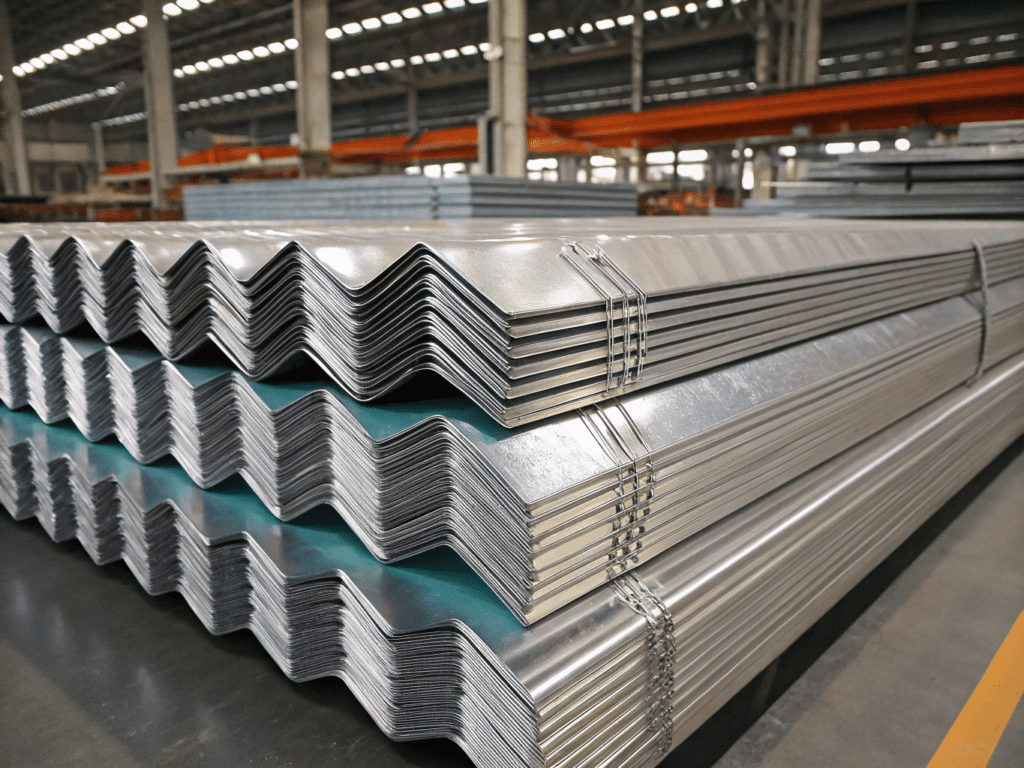
Zinc plating types differ by more than appearance: zinc plating itself protects steel with a sacrificial zinc layer, and the "type" describes the chromate conversion coating applied over it — as-plated, coloured, or colourless. Black oxide is different chemistry: a conversion coating that darkens the surface with essentially no sacrificial protection. Choose zinc plating where corrosion protection matters, and black oxide where appearance, dimensional stability and oiled indoor service matter.
This guide covers the zinc plating types and what they actually change, how the coating thickness interacts with threads and press fits, the hydrogen embrittlement requirement buyers forget, what salt spray testing really tells you, and how to write a callout a plating supplier can quote without guessing.
Zinc Plating Types: Type I, Type II and Type III
Zinc is deposited onto steel by electroplating — in a barrel for small parts, on racks for larger ones. It protects as a barrier against moisture and oxygen, and sacrificially, because zinc is less noble than steel and corrodes first at scratches and cut edges. The deposit is measured in micrometres, so dimensions barely change — though enough to matter on fine threads.
Freshly plated zinc is bright but unstable: it develops white corrosion quickly in humid air. A chromate conversion coating — a passivate — suppresses that white corrosion, adds colour and extends service life. The type designation describes that treatment, not the zinc itself.
| Type (ASTM B633 convention) | Supplementary treatment | Appearance | Typical use |
|---|---|---|---|
| Type I | As-plated, no chromate | Bright silver, prone to white corrosion | Parts plated then oiled or painted |
| Type II | Coloured chromate, usually yellow/iridescent | Gold-yellow | Automotive and outdoor brackets |
| Type III | Colourless chromate, clear/blue-bright | Silver-blue, bright | Indoor fasteners and hardware |
Other standards — ISO 2081 among them — number their types differently, so never specify a type number without naming the standard and revision. "Zinc plate Type II" means different things to different suppliers, while "zinc plate per the standard called out on the drawing, 12 µm, Type II, trivalent chromate, bake as specified" is unambiguous. If you only know the appearance, describe it — "clear/blue-bright, trivalent" — and let the supplier map it.
Electroplating Types Compared
Zinc is one option among several, and the choice usually follows the service environment plus whether the part must stay conductive, solderable or dimensionally tight.
| Finish | Appearance | Protection mechanism | Typical thickness | Usual reason to choose it |
|---|---|---|---|---|
| Zinc plating | Silver, blue, yellow or black by chromate | Sacrificial plus barrier | About 5–25 µm by class | General corrosion protection, thin film |
| Zinc-nickel alloy | Light grey, semi-matte | Sacrificial, higher corrosion resistance | About 5–15 µm | Severe duty, under-hood, coastal |
| Nickel electroplating | Bright to satin metal | Barrier; hard and wear-resistant | Application-dependent | Wear surfaces, decorative finish |
| Electroless nickel | Uniform satin metal | Barrier, deposited without current | Application-dependent | Complex geometry, even coverage |
| Tin plating | Matte to bright silver-white | Barrier; solderable | Application-dependent | Solderability, electrical contacts |
| Black oxide | Black, matte to semi-gloss | Conversion of the base metal only | Under about 1.5 µm | Oiled indoor parts, tight fits |
Two related treatments are often confused with plating but are not coatings at all. Passivation of stainless steel removes free iron from the surface and restores the passive oxide layer, improving corrosion resistance without adding a layer. Electropolishing is the electrochemical version, which also levels microscopic high points. Both apply to stainless rather than carbon steel, and both are specified by a standard and a test rather than a thickness.
Black Oxide and Blackening: How It Differs from Plating
Black oxide is produced by immersing steel in a hot oxidising salt bath, or in a cold selenium-copper chemistry, converting the surface itself into a thin black magnetite layer. Because it is a conversion of the base metal rather than a sacrificial coating, it gives almost no galvanic protection at scratches and is normally specified with oil, wax or a sealer. Thickness is usually well under 1.5 µm, which makes it effectively dimensionally neutral and suitable for tight thread fits. Hot blackening is an inexpensive batch process; cold blackening costs less but is less durable.
Where both are plausible, black oxide wins on assembly fit and cost and zinc plating wins on corrosion life. For the black look plus real corrosion protection, the answer is a black chromate over zinc, or black zinc-nickel — not black oxide.
Coating Thickness vs Thread Fit and Press Fits
Plating adds material to every surface, including the flanks of a thread and the wall of a bore. Zinc adds micrometres, so a plated thread normally assembles as it does bare, but the deposit lands on both the bolt and the nut, and on a fine pitch or a class-3 fit the cumulative effect is enough to change the gauge result. Thickness itself is set by the service condition — roughly 5–8 µm for mild indoor service, 8–12 µm for moderate exposure, and 12–25 µm or a zinc-alloy coating for severe outdoor and industrial use.
Three rules keep fits predictable. State the thickness class rather than a range, because the class is what the supplier controls. State the measurement method and location, since a magnetic gauge reading on a curved surface and a microscopic reading on a coupon are not the same number. And fix the sequence deliberately: plate before assembly where the fastener must stay conductive, or mask the threads and plate around them. Where a press fit, bearing bore or locating pin is involved, the tolerance on that feature should account for the coating — our note on precision sheet metal fabrication covers how those callouts interact.
Hydrogen Embrittlement and Baking Requirements
Electroplating can absorb atomic hydrogen into steel. In high-strength steels — commonly above roughly 1,000 MPa or around 32 HRC — that hydrogen migrates to stress concentrations and can cause delayed brittle fracture hours or days after assembly, which is why the failure so often appears on a part that passed inspection.
The standard mitigation is bake-out, or de-embrittlement: parts are heated after plating, typically around 190–220 °C for several hours, started promptly. Standards in the family of ASTM B850 describe such treatments, and the exact temperature, duration and start window must come from the specification you call out. Put four things on the drawing: the bake requirement with its standard, bake records with the certificate of compliance, the material strength class, and an explicit note that thicker plating is not assumed to be safer.
Salt Spray Testing: What the Hours Really Mean
Neutral salt spray to a standard such as ASTM B117 is the common corrosion test for plated parts, and the numbers people quote come in two forms: hours to white rust, the zinc corrosion product, and hours to red rust, the steel underneath corroding. Only red rust means the protection has actually failed.
An hour figure on its own is not a specification. Time to white or red rust depends on coating thickness, chromate chemistry, substrate condition, cut edges and the test conditions themselves, so a number taken from a brochure and applied to a different part is meaningless. Specify the test standard, the acceptance criterion in terms of white or red rust, and appearance limits, and let the supplier report results for your part.
Plating on Welded and Punched Edges
Plating is a wet process that reaches any surface the electrolyte can reach, which is why it covers cut edges, punched hole walls and weld toes far better than a spray-applied organic coating. That coverage is one of the strongest technical arguments for zinc on fabricated parts: a punched edge exposes bare steel, and a sacrificial coating protects it without a secondary operation. Two limits apply: weld porosity and slag can trap electrolyte and cause bleed-out or staining, so assemblies should be cleaned and dressed before plating, and heavy spatter produces a locally different finish that reads differently after plating — visible on a decorative part, harmless on a bracket. Where appearance matters, say which surfaces are cosmetic.
RoHS, REACH and Chromate-Free Alternatives
Hexavalent chromium in chromate conversion coatings is restricted under RoHS and REACH, which is why trivalent chromate now dominates compliant supply chains. Trivalent yellow looks like hexavalent yellow but does not perform identically: corrosion performance and the ability to accept a subsequent paint or powder coat both differ, so "yellow zinc" alone is an incomplete specification and the chemistry must be named.
Chromate-free alternatives exist and are chosen for compliance rather than performance: they are viable for many indoor and moderate environments but usually give less corrosion resistance than a good trivalent system. If your program has a compliance requirement, state it on the drawing and ask for the chemistry and test evidence rather than assuming a finish described as "RoHS compliant" also meets your corrosion target.
Cost and Lead Time: Plating vs Powder Coating vs Anodizing
Cost structure differs more than headline price. Plating and anodising are batch wet processes, so price is driven by batch size, geometry, racking or barrelling and the number of process steps rather than by part weight — which is why small parts barrelled in quantity are cheap per piece and large parts on racks are not. Powder coating is priced largely by surface area and colour changes, plus masking labour.
Lead time follows the same logic: plating and anodising are usually scheduled as batches at a specialist, so a job waits for a tank run, while powder coating can be run in-house within the production flow. That is one reason a designer may choose a coated finish for a visible panel and reserve plating for parts needing conductivity, fit or sacrificial protection.
SafeFaber's in-house finishing is powder coating. Zinc plating, blackening, anodising and other finishes are quoted and confirmed per project rather than claimed as our own process, and we will tell you plainly which route a job will take.
How to Write the Callout
A callout that produces the right part the first time names the process and the standard it is called out against, the type or supplementary treatment with its chromate chemistry, the thickness class with an agreed measurement method, the bake requirement for high-strength steels with documentation, and acceptance criteria for appearance, adhesion and corrosion testing. Add the masking list — threads, bores, electrical contacts and mating faces — and confirm whether rack plating is needed for parts that cannot be barrel tumbled.
Frequently Asked Questions
What is the difference between Type I, Type II and Type III zinc plating?
The type describes the chromate treatment over the zinc, not the zinc itself: Type I is as-plated with no chromate, Type II a coloured, usually yellow iridescent chromate, and Type III a colourless, clear or blue-bright chromate in the ASTM B633 convention. Other standards number their types differently, so always name the standard and revision.
Which lasts longer, zinc plating or black oxide?
Zinc plating lasts far longer in corrosive service, because it protects steel sacrificially even at scratches and cut edges. Black oxide is a conversion coating with essentially no sacrificial action and normally needs oil or a sealer, so it suits indoor oiled service rather than humid or outdoor environments.
Does zinc plating need de-embrittlement baking?
Yes for high-strength steels — commonly those above about 1,000 MPa or around 32 HRC — because absorbed hydrogen can cause delayed brittle fracture after plating. The part is baked at elevated temperature for several hours, starting soon after plating, with the cycle referenced to the applicable standard such as ASTM B850.
Can zinc plated parts be powder coated?
Yes, and the combination is common where a part needs sacrificial protection plus colour. Adhesion depends on the chromate present and on preparation, so tell the coater that a plated substrate is coming and agree the sequence in advance.
Related Reading
- Metal finishes chart — how to choose between coating routes.
- Zinc plating vs powder coating — conductivity, threads and fit compared.
- ASTM B633 zinc plating — what the standard actually covers.
SafeFaber fabricates the parts that get plated: laser cutting from 0.5 mm to 20 mm, CNC punching, CNC bending, welding, machining, in-house powder coating and turnkey assembly, with drawing review free with every quotation, under an ISO 9001:2015 quality management system. Send your drawing with the finish callout — or just the service environment — and we will confirm what we can supply: contact SafeFaber.