Copper vs Aluminum Busbars: How to Choose
Copper vs Aluminum Busbars: How to Choose
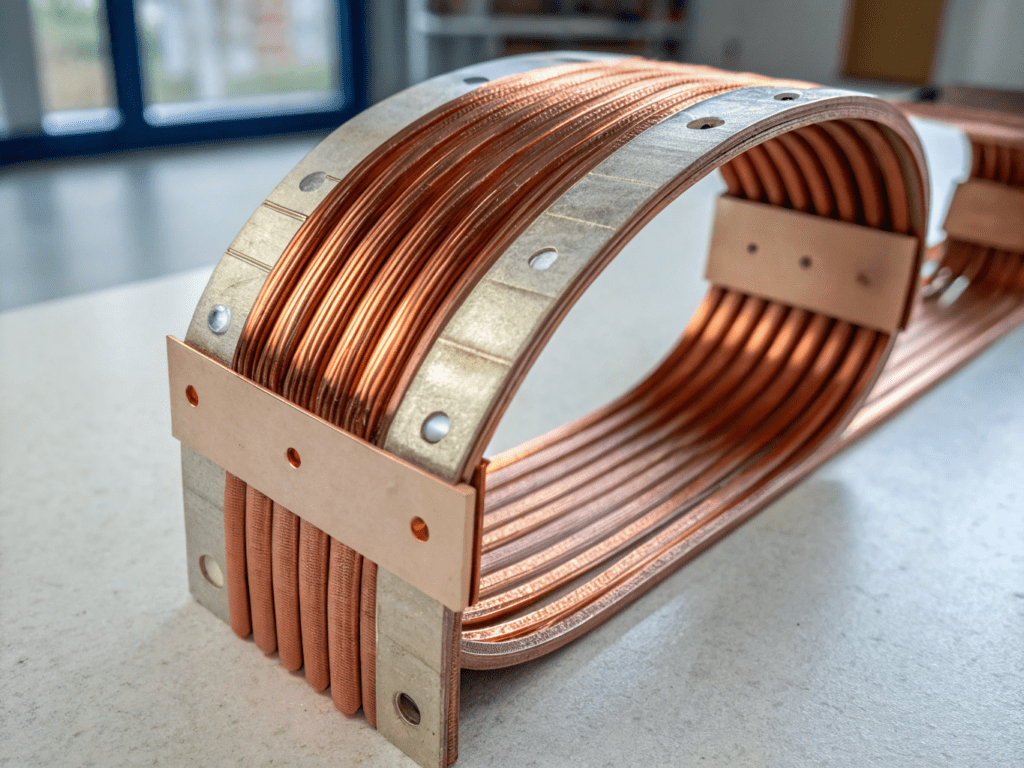
Quick answer: Copper busbars carry more current per unit of cross-section, while aluminum busbars are about one-third the density and generally cheaper per kilogram, so they win on weight and cost when there is room to grow the bar size. The harder questions are the joint, the environment and the drawing: copper-to-aluminum connections need transition plating or bimetallic hardware, and tin or nickel plating protects contact surfaces. Current-carrying capacity and temperature rise are determined by your electrical design and applicable standards, and must be verified by a qualified engineer. Request a quote with your drawing.
1. Why Busbar Material Is a Design Decision
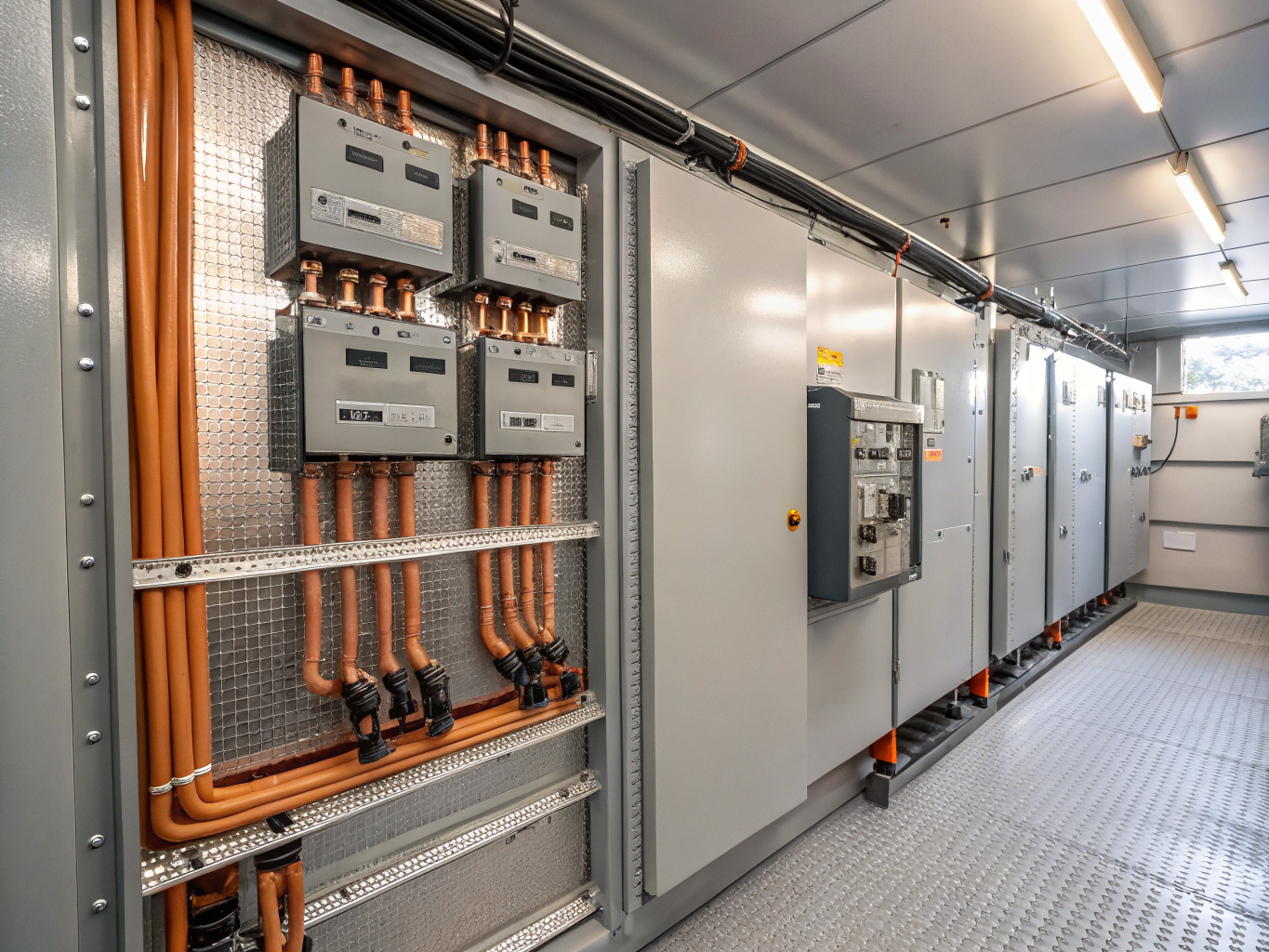
A busbar moves current from an incoming feed to breakers, contactors and outgoing circuits inside a cabinet or switchboard. Because it drives cost, weight and reliability at once, the copper-versus-aluminum question returns on almost every project. Four inputs decide it:
- Space available inside the enclosure
- Weight the structure, floor or vehicle can accept
- Cost of material, and of the joints that follow from it
- Environment, including humidity, salt, chemicals and vibration
This guide is a material and design comparison. Section 8 covers sourcing; electrical sizing always stays with your electrical design team.
2. Copper and Aluminum Compared
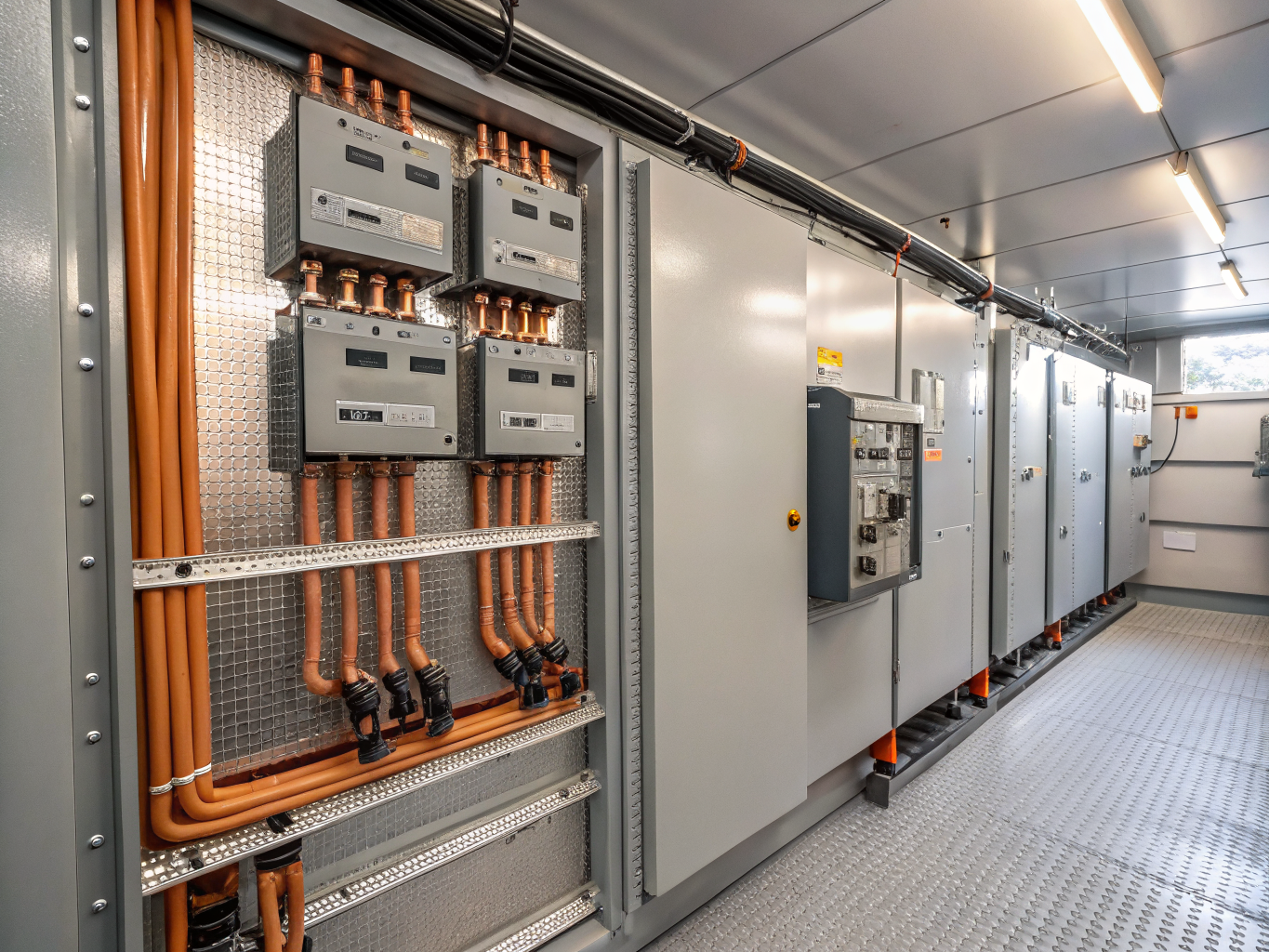
Two rules of thumb matter. First, conductivity: copper is the reference, and aluminum needs a larger cross-section for the same current, so the two are never interchangeable one-for-one by size. Second, weight: even after the bar grows, aluminum is still lighter for the same current, which is why it dominates long runs and transport work.
Neither rule tells you whether a design passes. Conductor sizing, short-circuit withstand, clearance and temperature rise are set by your electrical design and applicable standards, and must be verified by a qualified engineer.
3. What Actually Drives the Choice
Space-limited layouts. Inside dense switchgear, control cabinets and our power distribution cabinet range, the available volume is fixed. When the bar must fit a set slot between phases, copper is often the only material that keeps the design inside the footprint, because the geometry cannot grow with the cross-section.
Weight-sensitive designs. Long runs, rooftop equipment, mobile units, marine and transport installations, and any enclosure that is crane-lifted all punish extra mass. Aluminum cuts busbar weight sharply and can allow lighter framing and easier handling.
Cost structure. Material cost per kilogram is only the first line: bar stock is cheaper and less volatile, but heavier sections or more bars may be needed for the same duty, joints gain transition plates and bimetallic washers, and larger bars need larger bending tools and more support. Add all four lines before comparing quotes — a cheaper bar with an expensive joint is not a cheaper busbar.
Joint quality. Aluminum forms a tough oxide immediately and creeps under sustained bolt load, so joints loosen over time. Either way, plan for surface preparation before assembly, plated contact faces, spring washers that hold clamp load, and documented torque values.
4. Galvanic Corrosion: The Copper-to-Aluminum Trap
Put copper and aluminum in direct contact where moisture collects and you create a galvanic couple. Aluminum becomes the anode and corrodes, typically at the joint edges. Joint resistance rises, the joint runs hotter, and the damage accelerates.
This is not a reason to avoid mixed materials. It is a reason to design the transition deliberately.
Four rules apply everywhere: plate the contact faces; keep joints out of standing water with vertical runs and drip loops; never rely on paint for conductivity, so masked or plated contact zones belong on the drawing; and assemble clean, dry and promptly.
If your design mixes materials, say so in the specification. Our design engineering team can review geometry and assembly sequence, and free DFM feedback comes with every quotation.
5. Plating: Tin, Nickel and What They Do
Plating is the cheapest reliability upgrade in most busbar assemblies: it protects the base metal, stabilises contact resistance and makes the joint predictable.
- Tin is the default for most cabinets: soft, inexpensive and stable in contact resistance. Note that tin whiskers and tin-to-gold contact pairs are known issues in some applications, so specify the plating pair, not just the plating.
- Nickel is harder and more wear-resistant, performs better at elevated temperature and in corrosive environments, and suits joints opened during maintenance. It costs more and is harder to solder.
- Silver offers very low contact resistance for premium switchgear, but tarnishes and costs significantly more.
Whatever you choose, the requirement belongs on the drawing as a finish specification — the part is fabricated to the specification called out on the drawing. Masking and finishing run through our metal surface treatments process before assembly.
6. Fabrication: Cutting, Bending and Tolerances
Cutting and punching. Busbars need clean, burr-free edges and accurate hole positions. Punching suits repeating bolt-hole and slot patterns; laser cutting suits one-off profiles and complex outlines. Our fiber laser cutting covers 0.5–20 mm material thickness. For heavy bar sections outside that range, confirm feasibility before releasing the drawing.
Bending radius and springback. Copper bends predictably with modest springback and good ductility, so tight radii are practical in common tempers. Aluminum springs back more, so angles need compensation, and tight radii can crack harder tempers. Our CNC bending handles parts up to 3 m long, which covers most single-piece runs and offset bends. Where a run is longer, joints or sectional construction become a design decision rather than a fabrication detail.
Drawing content. State material and temper; bar cross-section with tolerance; plating type and thickness on every contact face; masked areas; hole sizes, positions and hole-to-edge distances; bend radius, angle and allowance; field-joint torque; and phase marking with part numbers.
7. Copper or Aluminum? A Practical Decision Table
The right answer is often both materials in one cabinet, with plated transitions where they meet. Mixed-material assemblies are normal; undocumented ones cause field failures.
8. Sourcing Busbars and Busbar Assemblies
Busbars and busbar assemblies can be fabricated from your drawing — confirm material, plating and tolerance requirements with our engineers. Evaluate a supplier on:
- Drawing discipline: does the quotation confirm material, plating, tolerance and revision?
- DFM feedback: free review catching bend radii, hole-to-edge distances and masking problems before production
- Process coverage: laser cutting, CNC punching, bending, welding and finishing in-house, which reduces hand-off errors
- Assembly: turnkey assembly with insulation, supports and hardware fitted before shipping
- Lead time: 24-hour quotations, 3–7 business days for prototypes, 2–4 weeks for batch production, plus door-to-door shipping
- Quality system: ISO 9001:2015, through Safety Spacs Ltd., Yantai, China
Send a DXF, DWG, STEP or PDF drawing and the team will confirm what is manufacturable as drawn.
Frequently Asked Questions
Q1: Is copper always better than aluminum for busbars?
No. Copper conducts better per unit of cross-section, but aluminum is far lighter and generally cheaper per kilogram. In weight-sensitive or cost-driven designs with room for a larger bar, aluminum is often the better engineering choice. Your electrical design and applicable standards determine whether the selected material and section actually work.
Q2: Can copper and aluminum busbars be bolted directly together?
They can be joined, but not safely as bare metal in a damp environment: the joint forms a galvanic couple and the aluminum side corrodes. Use tin-plated contact faces, a bimetallic transition plate or bimetallic lugs, keep the joint dry, and apply the specified torque with spring washers.
Q3: Why tin-plate a copper busbar if copper already conducts well?
Plating is about the joint, not the bulk conductor. Tin protects the contact surface from oxidation, keeps contact resistance stable through thermal cycling, and gives hardware a repeatable interface. Nickel plating does the same with better wear and corrosion resistance at higher cost.
Q4: Does the busbar material change how tightly it can be bent?
Yes. Copper is more forgiving and takes tighter radii in common tempers. Aluminum springs back more and can crack at tight radii in harder tempers, so bend radius and temper must be specified together. Our CNC bending covers parts up to 3 m long.
Q5: Can SafeFaber fabricate busbars and busbar assemblies from our drawings?
Busbars and busbar assemblies can be fabricated from your drawing — confirm material, plating and tolerance requirements with our engineers. We review the drawing for manufacturability and fabricate to the specification called out on the drawing. Final sizing, insulation and clearances stay with your qualified electrical engineer.
Q6: What information do you need for a busbar quotation?
A drawing or 3D file with material, temper, cross-section, plating, hole positions, bend radii and quantities, plus the operating environment and whether parts must be insulated, masked or assembled. Quotations return within 24 hours, prototypes in 3–7 business days and batch production in 2–4 weeks.
Conclusion: Decide the Material, Then Protect the Joint
Copper and aluminum are both proven busbar materials. Choose copper when the layout is tight or joint reliability cannot be compromised; choose aluminum when weight and cost dominate and the footprint can grow. Whichever you pick, spend the design effort on the connection — plating, transitions, torque and drainage decide whether the busbar is still healthy after years of thermal cycling.
SafeFaber fabricates custom enclosures, panels and electro-mechanical assemblies for industrial clients worldwide, with in-house laser cutting, CNC punching, bending, MIG/TIG/spot welding, powder coating and turnkey assembly. Explore our electrical control cabinet and sheet metal fabrication capabilities, then send your drawing for a 24-hour quotation.