Power Distribution Cabinet: Types, Components & Custom Fabrication Guide
Power Distribution Cabinet: Types, Components & Custom Fabrication Guide
Quick answer: A power distribution cabinet is an enclosure housing switchgear, breakers, busbars, and control components that splits incoming electricity and protects branch circuits across a facility. For general industrial environments, specify at least IP54; dusty or outdoor sites need IP65. High-current cabinets usually require active cooling, and every 10°C reduction in operating temperature roughly doubles insulation life. Send your breaker schedule to request a quote.
1. Introduction
Every industrial facility depends on power distribution. The power distribution cabinet is where incoming electricity is split, protected, and routed to the equipment that runs the plant. Get the cabinet right, and operations stay safe and reliable. Get it wrong, and you risk downtime, arc flashes, and safety violations.
This guide explains what power distribution cabinets do, the main types, the components inside them, and how to specify custom-built cabinets for your project.
Power distribution design follows a hierarchy: the main panel receives the feed, sub-panels split it by zone, and branch panels reach individual loads. Understanding this hierarchy helps you place the right cabinet at each level and size it correctly.
2. What Is a Power Distribution Cabinet?
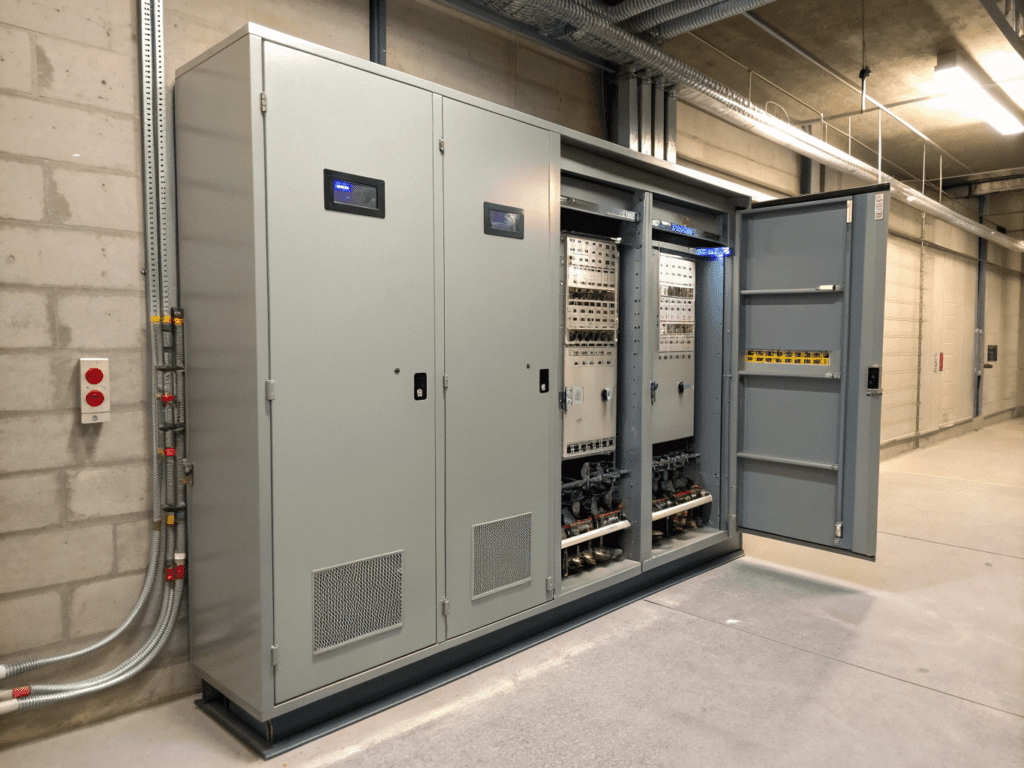
A power distribution cabinet is an enclosure that houses switchgear, breakers, busbars, and control components. It receives power from a transformer or generator and distributes it to branch circuits across the facility.
Inside the cabinet, the key components include:
- Main breaker: protects the incoming supply
- Busbars: copper or aluminum bars that carry current between breakers
- Branch breakers: protect individual circuits
- Metering: current, voltage, and energy monitoring
- Control components: contactors, relays, and PLCs where automation is required
The cabinet itself must provide structural support, thermal management, and protection from dust, moisture, and contact. SafeFaber builds custom power distribution cabinets and electrical control cabinets for industrial applications worldwide.
A good cabinet also makes maintenance safe and fast: labeled breakers, logical groupings, accessible wiring ducts, and clearances that let a technician work without contortion. These details separate a professionally built cabinet from a welded box with a door.
3. Main Types of Power Distribution Cabinets
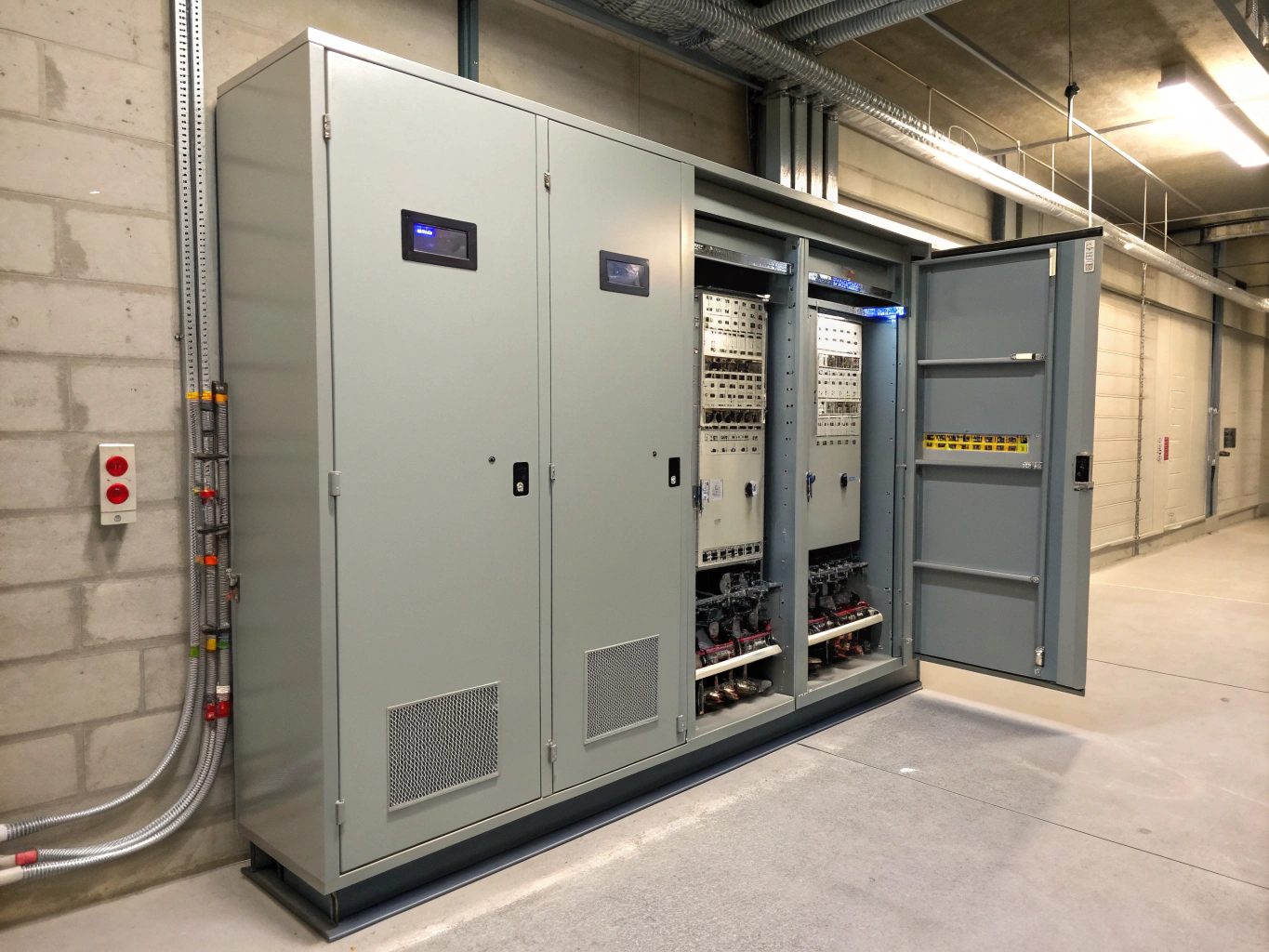
3.1 Main Distribution Panels
The primary cabinet receiving incoming power from the utility or transformer. It holds the main breaker and feeds all downstream distribution.
3.2 Sub-Distribution Panels
Smaller cabinets that distribute power to specific zones: production lines, floors, or departments. They isolate faults so one area's problem does not shut down the whole plant.
3.3 Motor Control Centers (MCC)
Cabinets that combine motor starters, breakers, and control for groups of motors. Our MCC cabinets range covers modular starter configurations.
3.4 Switchgear and Switchboards
High-current assemblies for large loads and utility interconnections. Switchgear includes protection and metering for the main incoming feeds.
3.5 Control Panels
Cabinets housing PLCs, relays, and operator interfaces. They manage automation sequences. See our control panel enclosures for the enclosure options.
4. Key Components Inside the Cabinet
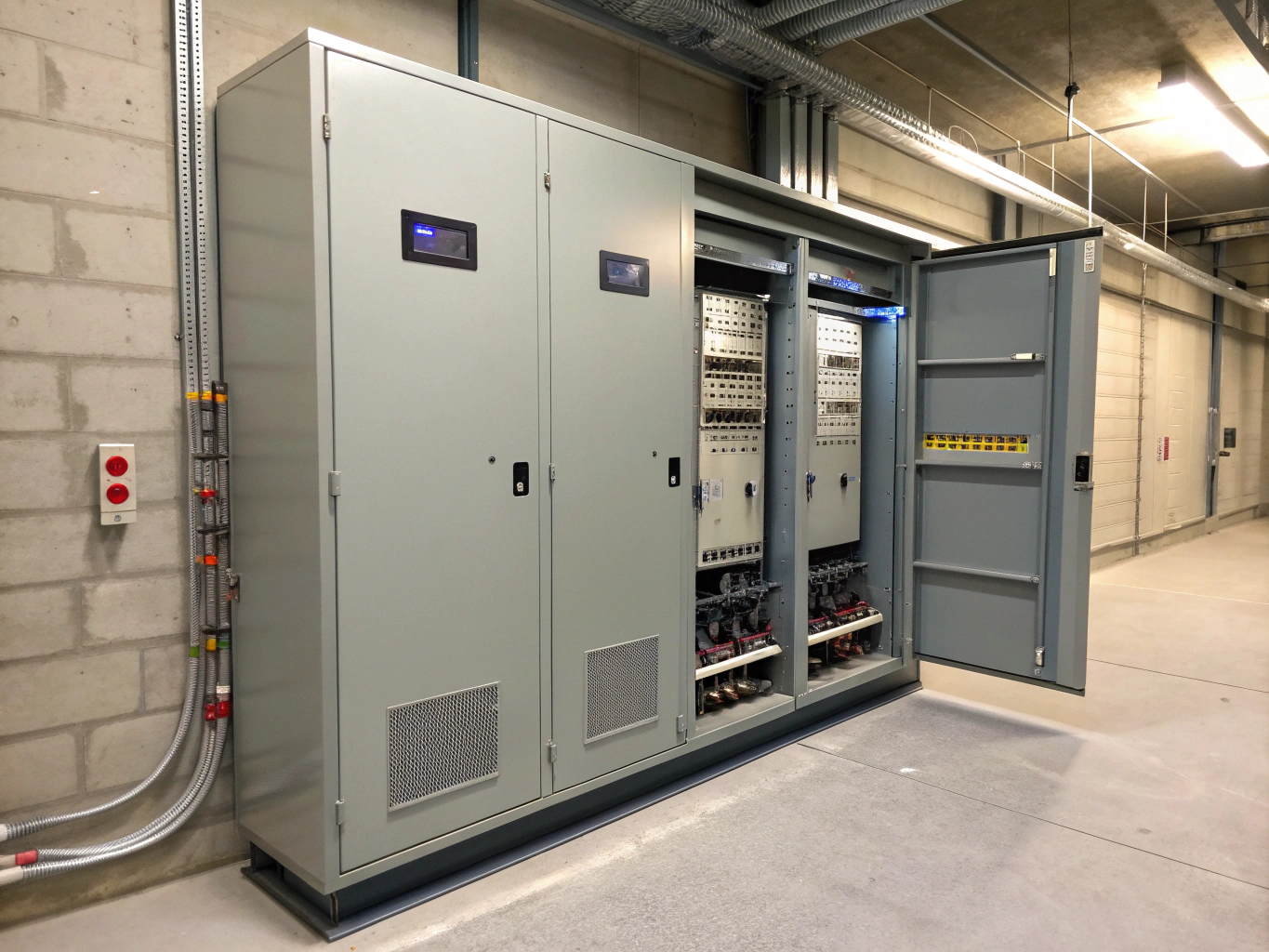
A well-built cabinet integrates these elements cleanly:
| Component | Function |
|---|---|
| Busbar system | Distributes current with low resistance |
| Circuit breakers | Protect circuits from overload and short circuit |
| Contactors / relays | Switch loads and enable automation |
| Surge protection | Divert voltage spikes |
| Metering and CTs | Measure current for monitoring |
| Cooling fans / vents | Remove heat from high-current sections |
Component layout affects safety and serviceability. Breakers should be grouped logically, labeled clearly, and mounted with safe working clearances. Busbars need insulation and separation per code.
Arc-flash safety is a growing concern in industrial power. Reinforced door construction, interlocked access, and proper warning labeling are standard on modern high-energy cabinets. Discuss arc-flash incident energy levels with your electrical engineer when specifying the enclosure.
5. Enclosure Standards and IP Ratings
The enclosure must match the environment and the electrical standard.
- IP ratings: IP54 for general industrial, IP65 for dusty or outdoor locations
- NEMA ratings: NEMA 1 indoor, NEMA 12 dust-tight, NEMA 4/4X weatherproof
- Arc-flash considerations: reinforced doors and interlocks for high-energy panels
Match the rating to the actual environment. A cabinet rated too low fails early; one rated too high wastes budget. The IP code system is the starting point for outdoor and dusty environments.
6. Thermal Management for Power Cabinets
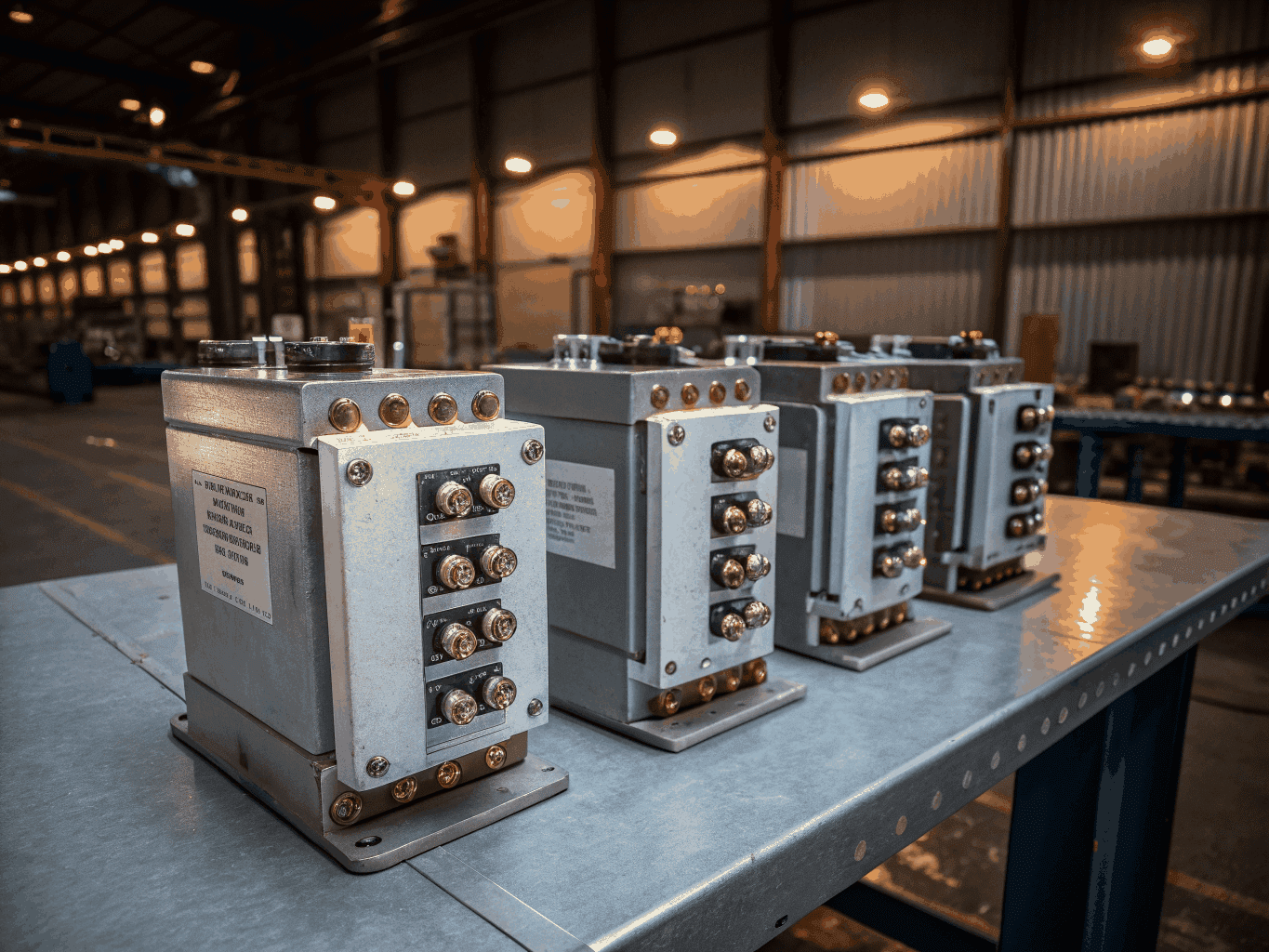
Power cabinets generate real heat. Every ampere through a breaker or busbar produces waste heat, and enclosed cabinets trap it.
Thermal solutions include:
- Natural ventilation: louvered intake and roof exhaust
- Forced-air fans: thermostatically controlled
- Heat exchangers: sealed cooling without opening the cabinet
- Air conditioning: for high-density or sensitive environments
- Busbar sizing: correctly sized copper reduces resistive heat at the source
Temperature affects component life directly. A 10°C reduction in operating temperature roughly doubles the life of electrical insulation.
Ventilation design must balance cooling against contamination. Filtered intakes keep dust out; fans sized for the actual heat load move air without excessive noise; and thermostat control runs them only when needed. For outdoor installations, sealed heat-exchanger designs avoid letting humid air in at all.
7. How to Specify a Custom Power Distribution Cabinet
- Define the electrical design: voltage, current, breaker schedule, and load list
- Set the environment rating: IP/NEMA for the installation site
- Plan the layout: component arrangement, wireways, and service access
- Confirm thermal design: heat load and cooling method
- Check compliance: IEC, UL, or local standards for your market
- Plan cable entry: top, bottom, or side; gland plates and bushing
Write the specification down. A clear spec prevents rework and lets suppliers quote fairly. SafeFaber's design and engineering team supports the enclosure design around your electrical layout.
8. Fabrication Quality That Matters
The enclosure is only as good as its fabrication:
- Sheet metal gauge: heavy enough for structural rigidity
- Welding: continuous, clean seams for sealing and strength
- Surface treatment: powder coating resistant to the environment
- Door and hinge quality: square, aligned, and durable
- Grounding provisions: dedicated earth bonding points
The same quality discipline applies across our industrial cabinets and enclosures line. For the broader storage and housing picture, our industrial storage cabinets 101 guide is a useful reference.
Every cabinet we ship includes material certificates and inspection documentation. For OEM programs, first-article reports and production traceability are available on request — the same documentation standards we apply to all electrical enclosure projects.
9. Frequently Asked Questions
Q1: What is the difference between a power distribution cabinet and a control panel?
Distribution cabinets manage and protect power circuits. Control panels manage automation and signals. Many installations combine both functions.
Q2: What IP rating do industrial power cabinets need?
IP54 is a common indoor baseline; IP65 for dusty or outdoor sites. Match to the environment and electrical code.
Q3: Can you build cabinets to our electrical design?
Yes. We build to your breaker schedule and layout drawings, with DFM feedback on the enclosure design.
Q4: What material is used for busbars?
Copper for high conductivity and reliability; aluminum for cost-sensitive applications. Busbar design follows the current rating.
Q5: Do power cabinets need active cooling?
High-current cabinets usually do. Fans or heat exchangers extend component life and prevent nuisance trips.
Q6: Can the cabinet include metering and monitoring?
Yes. Metering panels, CT mounting, and monitoring integration are standard customization options.
10. Conclusion
A power distribution cabinet is the heart of industrial electrical infrastructure. Choose the right type, components, rating, and fabrication quality — and it will serve your facility safely for decades.
SafeFaber fabricates custom power distribution cabinets and electrical enclosures for projects across many industries, with certified quality and worldwide on-time delivery. Share your electrical design for a custom quote.