Outdoor Waterproof TV Enclosure: How to Protect Displays in Harsh Environments
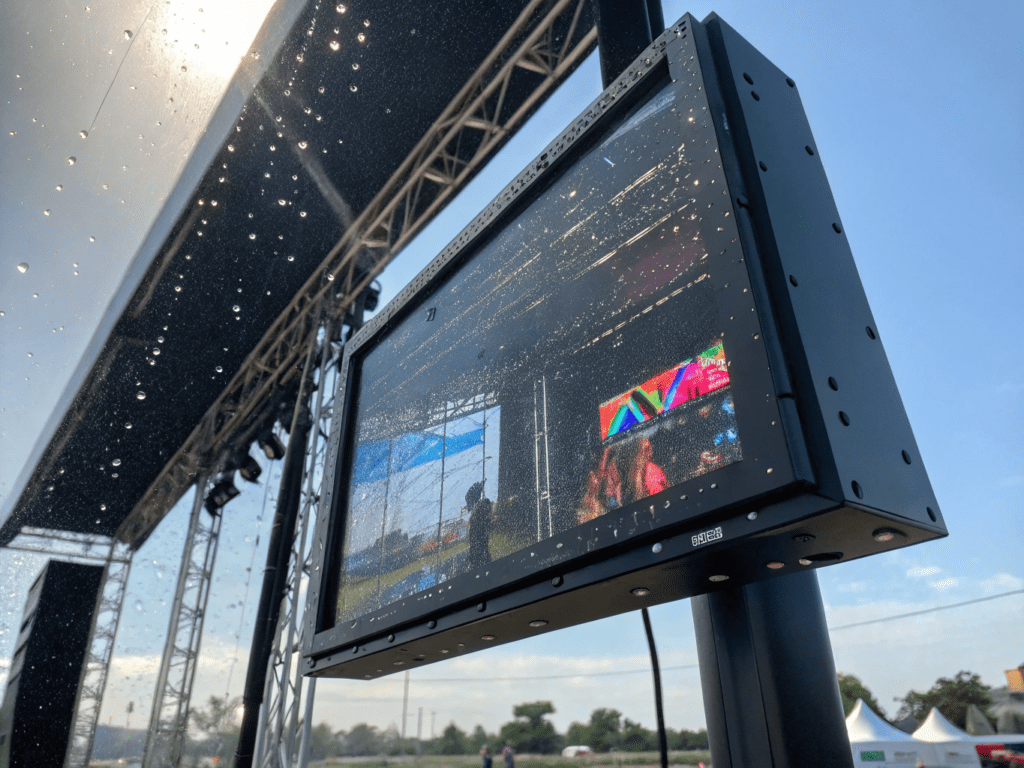
Outdoor Waterproof TV Enclosure: How to Protect Displays in Harsh Environments
Quick answer: An outdoor waterproof TV enclosure is a weatherproof, climate-controlled housing that protects commercial displays from sun, rain, dust, and vandalism. Exposed sites typically need IP65 (dust-tight, water-jet resistant) or IP66, while sheltered locations may use IP54–IP55. Inside an unvented enclosure in direct sun, temperatures can exceed 60°C. Standard sizes fit 32–75 inch displays. Request a quote with your site conditions.
1. Introduction
Outdoor displays face a brutal environment. Sun, rain, dust, temperature swings, and vandalism all attack screens that were never designed for the outdoors. An outdoor waterproof TV enclosure solves that problem by giving a commercial display a protective, climate-controlled home.
Enclosures are used everywhere: gas stations, drive-throughs, factory floors, stadiums, transit stops, marine docks, and building exteriors. This guide covers the ratings, materials, and features that decide whether an enclosure protects its display for years or fails in months.
Before you buy, define three things: the display model and size, the site conditions (sun exposure, rain, salt, temperature range), and the viewing distance. These three inputs determine the IP rating, thermal design, and mounting you need.
2. Why Outdoor Displays Need Enclosures
Commercial TVs are designed for indoor conditions: controlled temperature, low humidity, and no direct water. Outdoors, every factor changes:
- Direct sunlight heats the screen far beyond safe operating range
- Rain and humidity damage electronics and connectors
- Dust and sand clog vents and scratch surfaces
- Temperature swings cause condensation and component stress
- Theft and vandalism threaten the display itself
An outdoor TV enclosure shields the display while maintaining visibility and airflow. The best units look like part of the site, not an afterthought. SafeFaber builds outdoor waterproof TV enclosures for commercial and industrial installations worldwide.
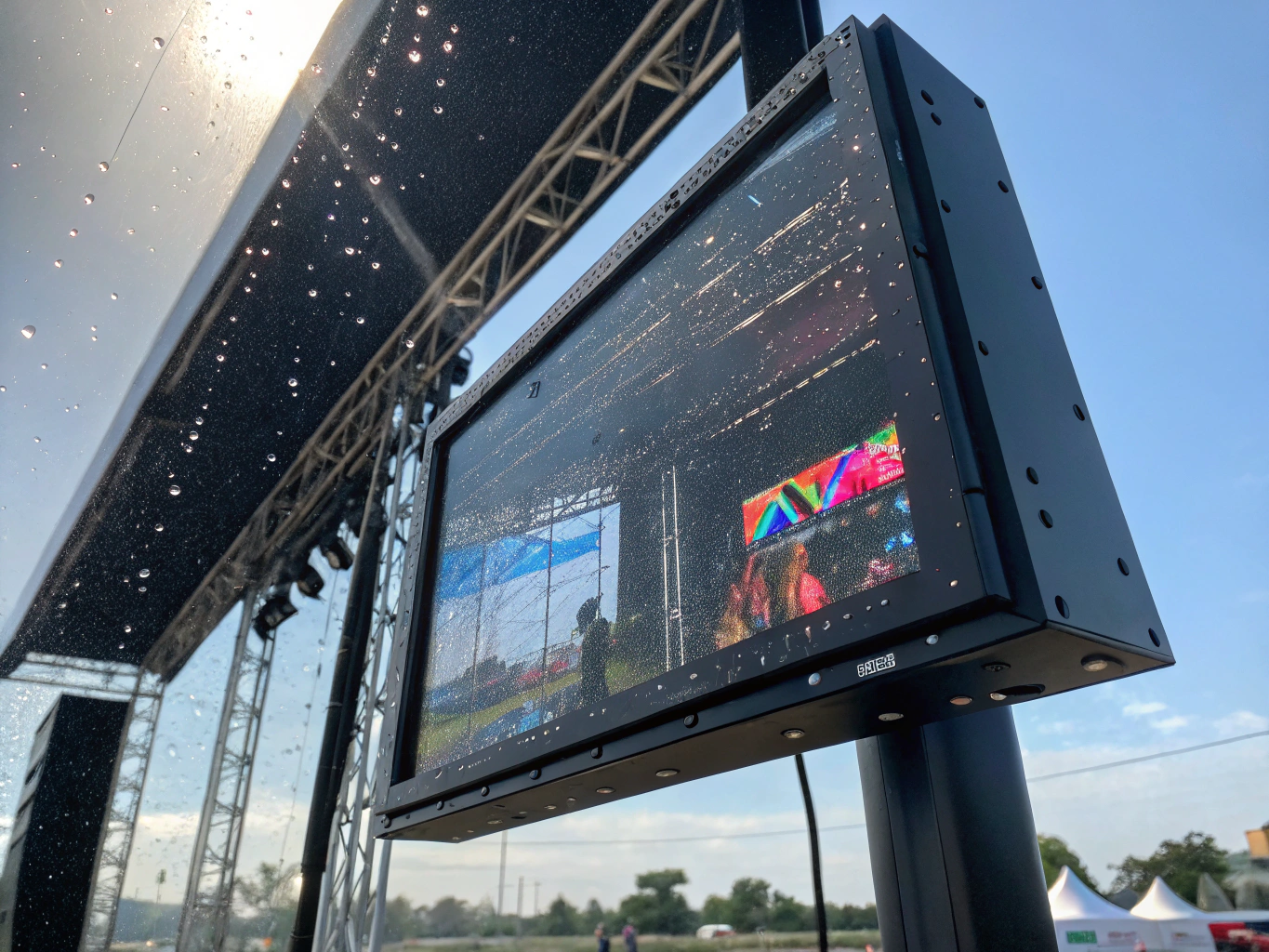
3. IP Ratings: What "Waterproof" Actually Means
Waterproof claims mean nothing without an IP rating. The IP code system defines protection against solids and liquids with two digits.
For outdoor TV enclosures:
- IP54: splash-resistant — suited to sheltered locations
- IP55: water-jet resistant — a common outdoor baseline
- IP65: dust-tight and water-jet resistant — the recommended standard for exposed sites
- IP66: powerful water-jet resistant — for harsh, weather-exposed installations
Match the rating to the site. A covered drive-through may be fine at IP54; an open rooftop or coastal location needs IP65 or better. Confirm the rating with the manufacturer's test certificate.
Remember that the enclosure rating protects the display, not the other way around. If the enclosure leaks, the display fails — so verify the rating, the gasket material, and the test documentation before purchase.
4. Thermal Management: The Screen's Best Friend
Heat is the number one killer of outdoor displays. A screen in direct sun can exceed 60°C inside an unvented enclosure, well above safe operating range.
Effective enclosures manage temperature with:
- Passive ventilation: filtered intake and exhaust using convection
- Forced-air fans: thermostatically controlled airflow
- Active cooling: air conditioning or heat exchangers for hot climates
- Solar shields: overhangs and baffles that block direct sun
- Heated versions: for cold climates, preventing condensation and frozen operation
A practical check: measure the temperature inside the enclosure during the hottest hour of a summer day. If the air behind the glass is uncomfortable to touch, the display is working too hard. Fans and climate control pay for themselves in display life.
Some enclosures include automatic climate control that switches between heating and cooling. This is the difference between a display that lasts its rated life and one replaced every season.
5. Materials and Construction
The enclosure shell must survive the environment it protects.
- Powder-coated steel: strong, cost-effective, corrosion-resistant with proper coating
- Stainless steel (304/316): maximum durability for coastal and chemical environments
- Aluminum: light, corrosion-resistant, good for wall and pole mounts
- UV-stable finishes: prevent fading and chalking in direct sun
Construction details matter: continuous welds instead of seams, sealed cable entries, marine-grade gaskets, and tamper-resistant fasteners. Ask how the enclosure is sealed and tested — a gap in the gasket is a leak waiting to happen.
For coastal sites, specify salt-spray-tested finishes per ASTM B117. For factory environments, consider chemical resistance against oils and cleaning agents. The enclosure finish is a maintenance cost either way — spend once on the right one.
6. Front Glass and Viewing Performance
The enclosure front must protect the display without hurting visibility.
Key options:
- Tempered glass: impact-resistant, standard for most installations
- Anti-glare coating: reduces reflections in bright sunlight
- Anti-vandal options: polycarbonate or laminated glass for high-risk sites
- Heated glass: prevents condensation and frost in cold climates
Glass performance directly affects the viewer experience. Test the enclosure in the actual lighting conditions of your site before committing to a design.
7. Mounting and Installation
Outdoor enclosures mount in several ways:
- Wall mounting: the most common for building exteriors
- Pole mounting: for drive-throughs, parking lots, and transit stops
- Freestanding: for kiosks and wayfinding installations
- Ceiling or cantilever: for covered outdoor areas
Consider viewing angle, sun path, and service access when choosing the mount. A display that is hard to service will be serviced rarely — and fail early.
Also plan the cable path before installation. Power, video, and network cables need weatherproof entry points and drip loops so water cannot run into the enclosure. Pre-terminated cables with proper glands make installation faster and safer.
8. Custom vs Standard Enclosures
Standard sizes fit common display sizes (32, 43, 55, 65, 75 inches). Custom enclosures win when you need special dimensions, integrated audio, specific branding, or unusual mounting.
Custom options include dual-screen configurations, integrated speakers and sensors, brand-matched color and logos, and special ventilation layouts for high-brightness displays. If your site is unusual, a standard enclosure will cost you more in the long run than a custom one.
SafeFaber designs custom enclosures around your display model, with engineering support from concept to production. The same fabrication discipline applies to our instrument enclosures and other outdoor housings.
9. Frequently Asked Questions
Q1: What IP rating do I need for an outdoor TV enclosure?
IP65 for exposed sites; IP54-IP55 for sheltered locations. Confirm the test certificate.
Q2: Do outdoor enclosures need active cooling?
In most sunny climates, yes. Passive ventilation helps, but active cooling or climate control is recommended for reliable year-round operation.
Q3: Can I use a regular consumer TV in an outdoor enclosure?
Yes — that is the point of the enclosure. Commercial displays are recommended for brightness and longevity, but the enclosure protects standard displays too.
Q4: How do I prevent condensation on the glass?
Heated glass, desiccant packs, and climate-controlled enclosures all prevent condensation. Choose based on your climate.
Q5: What is the lifespan of an outdoor TV enclosure?
Quality enclosures last 10-20 years with routine maintenance: gasket checks, cleaning, and filter replacement.
Q6: Can you match the enclosure to our brand?
Yes. Custom color, logo application, and branding are available on custom-built enclosures.
Q7: Do enclosures work with touchscreens?
Yes, with appropriate glass and calibration. Confirm touch compatibility with your display model before fabrication.
Q8: What maintenance does an outdoor enclosure need?
Quarterly checks of gaskets, filters, fans, and fasteners; cleaning of glass and vents; and annual inspection of seals and coating condition.
10. Conclusion
An outdoor display is only as reliable as its enclosure. Choose the right IP rating, thermal management, materials, and mounting — and your display will work for years in the harshest conditions.
SafeFaber builds outdoor waterproof TV enclosures and weatherproof housings for commercial and industrial sites across many industries, with custom sizing and worldwide on-time delivery. Share your display model and site conditions for a custom proposal.