How to Find a Reliable Custom Sheet Metal Fabrication Partner for Global OEMs
How to Find a Reliable Custom Sheet Metal Fabrication Partner for Global OEMs
Quick answer: Find a reliable sheet metal fabrication partner by defining your specification first, then evaluating the factory, not the brochure: verify ISO 9001:2015 certification, in-house capabilities, and subcontracting details. Shortlist 3–5 suppliers, trial 2–3 with real parts, and qualify one primary with a backup. Expect a 24-hour quote response and first-article documentation — request a quote to start a qualification.
1. Introduction
Finding a reliable fabrication partner is one of the most important purchasing decisions an OEM makes. The wrong partner costs you in defects, delays, and damaged customer relationships. The right one becomes an extension of your team for years.
This guide gives global OEM buyers a practical framework: what to evaluate, what to ask, and what should disqualify a supplier immediately. For the complete selection framework, also read our how to choose a fabrication partner guide.
2. Start With Your Own Specification
Before evaluating suppliers, define what you need:
- Materials, finishes, and tolerances
- Annual volumes and order patterns
- Quality documentation requirements
- Target price and lead times
- Geographic and logistics constraints
A clear specification filters suppliers fast. Suppliers that ask the right questions about your spec are usually better partners than those that quote instantly on vague drawings.
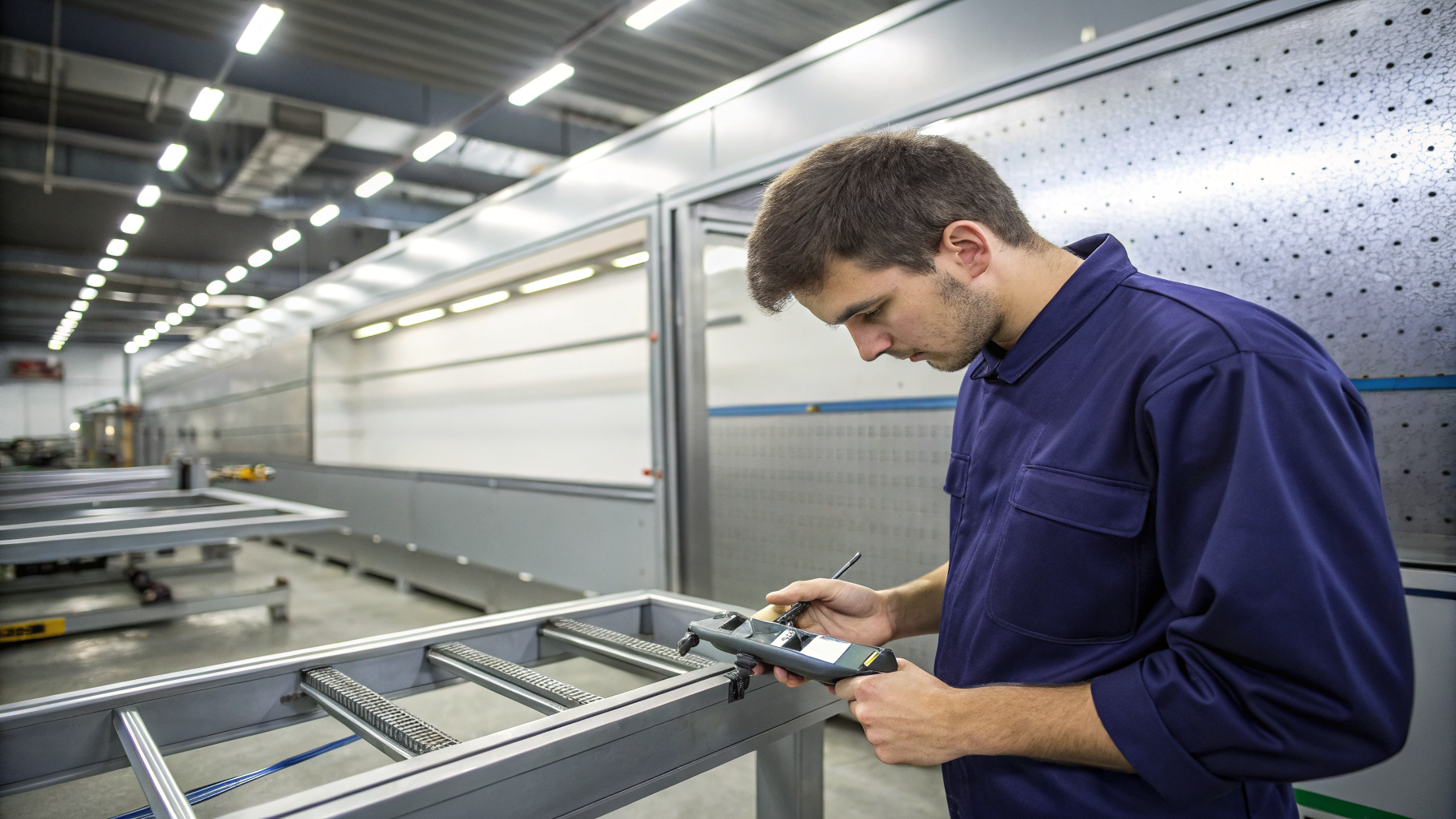
Include your quality expectations in the spec: inspection reports, material certificates, and first-article requirements. Suppliers that object to documentation are telling you something.
3. Evaluate the Factory, Not the Brochure
3.1 In-House Capabilities
Does the supplier run the full process — cutting, bending, welding, finishing, assembly — in-house? Subcontracted steps add hand-offs and quality gaps. One-factory operation means one quality system.
Ask what percentage of work is subcontracted and who the subcontractors are. There is nothing wrong with some outsourcing, but the supplier should own and document the quality of every step.
3.2 Certifications and Documentation
ISO 9001:2015 is the baseline. Ask for material certificates, inspection reports, and first-article documentation. For regulated industries, add the relevant standards.
3.3 Engineering Support
A partner that reviews your drawings for manufacturability saves you money. Ask for a sample DFM review before committing. Our design and engineering service is a good benchmark.
3.4 Communication
Test response time with your first inquiry. A 24-hour quote response is the industry standard we hold ourselves to. You want a named engineer, not a black box.
Also test how questions are handled: do you get direct answers from an engineer, or vague responses from a sales desk? The communication pattern you see during quoting is the pattern you will get during production.
4. Red Flags to Watch For
- No verifiable certifications
- Vague answers about subcontracting
- Quotes without asking about your application
- No inspection documentation offered
- Reluctance to sign NDAs
- Unrealistic pricing or lead times
Any one of these deserves a deeper look before you commit.
5. The Qualification Process
- Paper review: certifications, references, financial health. Check that certificates are current and issued by the right bodies — a photocopy of an expired certificate is a common shortcut.
- Virtual or on-site audit: factory, equipment, quality systems. Look at equipment condition, housekeeping, and the inspection room — equipment tells you about investment; the inspection room tells you about quality culture.
- Trial order: a real part through the full process. Evaluate the first-article report, documentation, and communication through the whole order.
- First-article review: measure the delivered parts against the drawing
- Scale-up: begin with smaller volumes, then grow
The trial order is the most reliable test. It reveals communication quality, inspection honesty, and delivery reliability better than any audit.
Define success criteria before the trial: on-time shipment, documentation completeness, dimensional accuracy, and defect rate. Measure all of them, not just the final price.
6. Working with a China-Based Partner
Many global OEMs source custom sheet metal fabrication from China for cost and capability. Key considerations:
- Time zone communication: agree on overlap hours and response windows
- Logistics: export packing, Incoterms, and freight management matter
- Quality control: third-party inspection options before shipment
- IP protection: NDAs and secure file handling
A partner with export experience manages these for you. Our supply chain team handles door-to-door delivery as standard.
7. Frequently Asked Questions
Q1: How many suppliers should I evaluate?
Shortlist 3-5, trial 2-3, and qualify one primary with a backup. Concentration risk is real.
Q2: What if my volumes are small?
Look for suppliers that take prototypes and small batches seriously. Their larger customers' capacity discipline benefits you too.
Q3: How important is the site visit?
Very, for long-term partnerships. A virtual tour is a good first step; a physical audit is best before mass production.
Q4: How do I protect my drawings?
Use NDAs, watermarked drawings, and controlled file sharing. Established manufacturers handle confidential files routinely.
Q5: What are fair payment terms for new partners?
Typical terms are 30-50 percent deposit with balance before shipment for new relationships, moving to better terms as trust builds.
Q6: Should I use an inspection service?
For new suppliers, third-party inspection before shipment is a low-cost insurance policy. Many buyers use it for the first several shipments, then relax as quality data accumulates.
Q7: How do I exit a partnership cleanly?
Keep tooling and files in your control, maintain documentation, and plan the transition with a clear schedule. A clean contract covers both entry and exit.
Q8: How important is location?
Less than capability for most products. Global sourcing with managed logistics works well when communication and freight are handled properly — see our supply chain page for how that works in practice.
8. Conclusion
A reliable fabrication partner is found by process, not luck: define your spec, evaluate the factory, run a trial order, and scale deliberately. The effort pays back in years of smooth production.
SafeFaber is a contract fabrication partner for global OEMs across many industries, with ISO-certified in-house production and worldwide delivery. Start with a qualification call today.
Related guides: supplier due diligence.